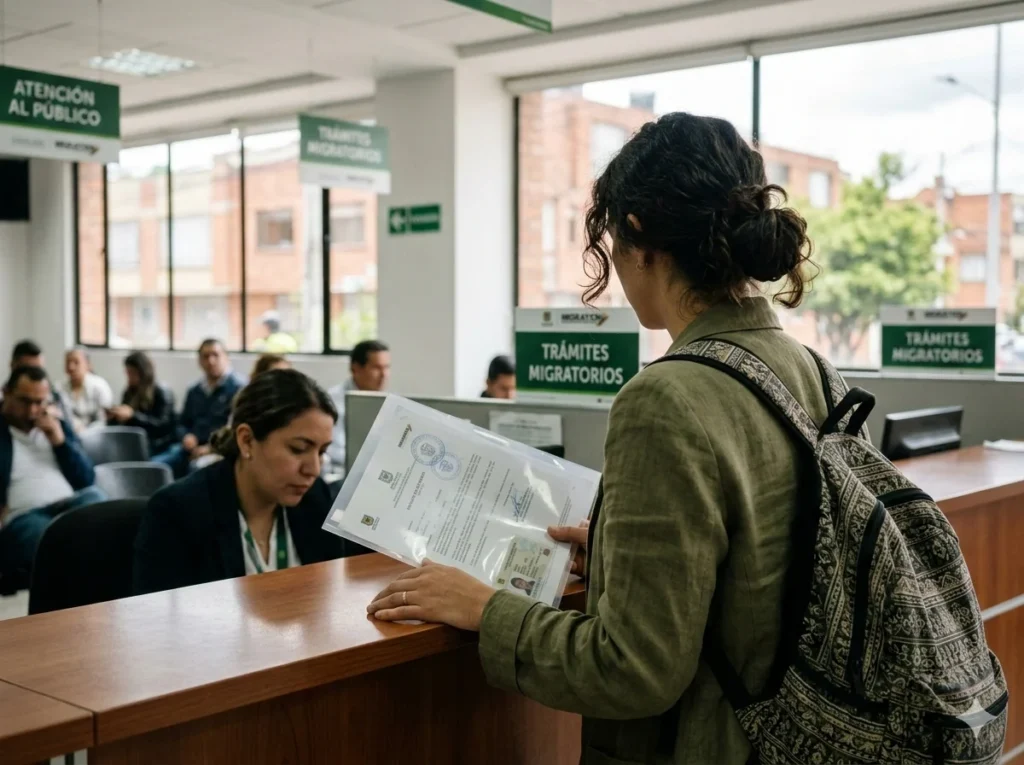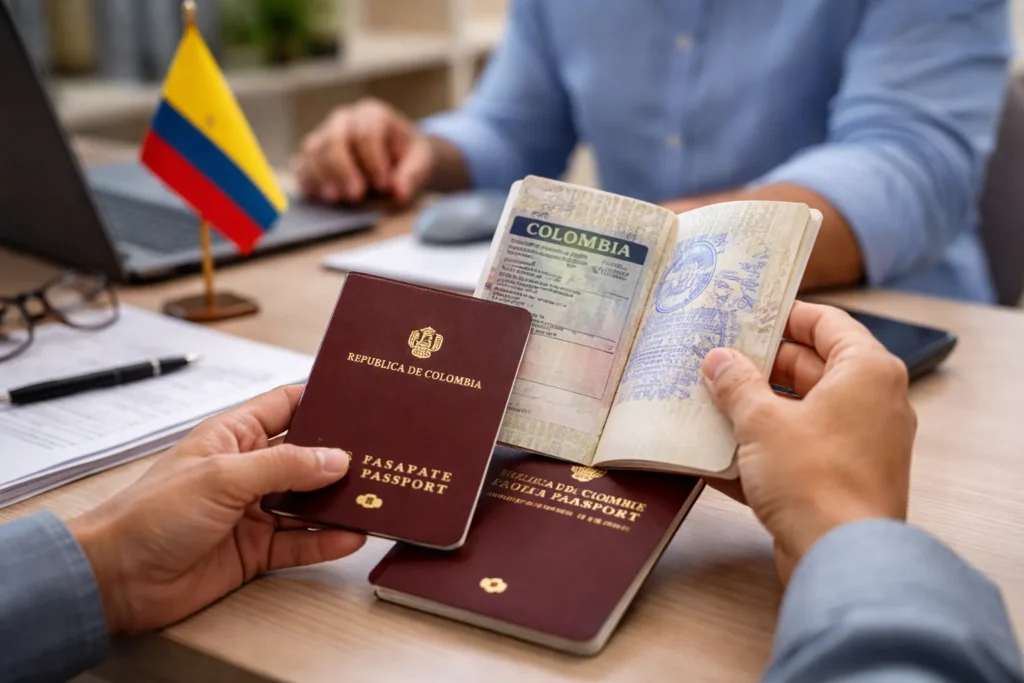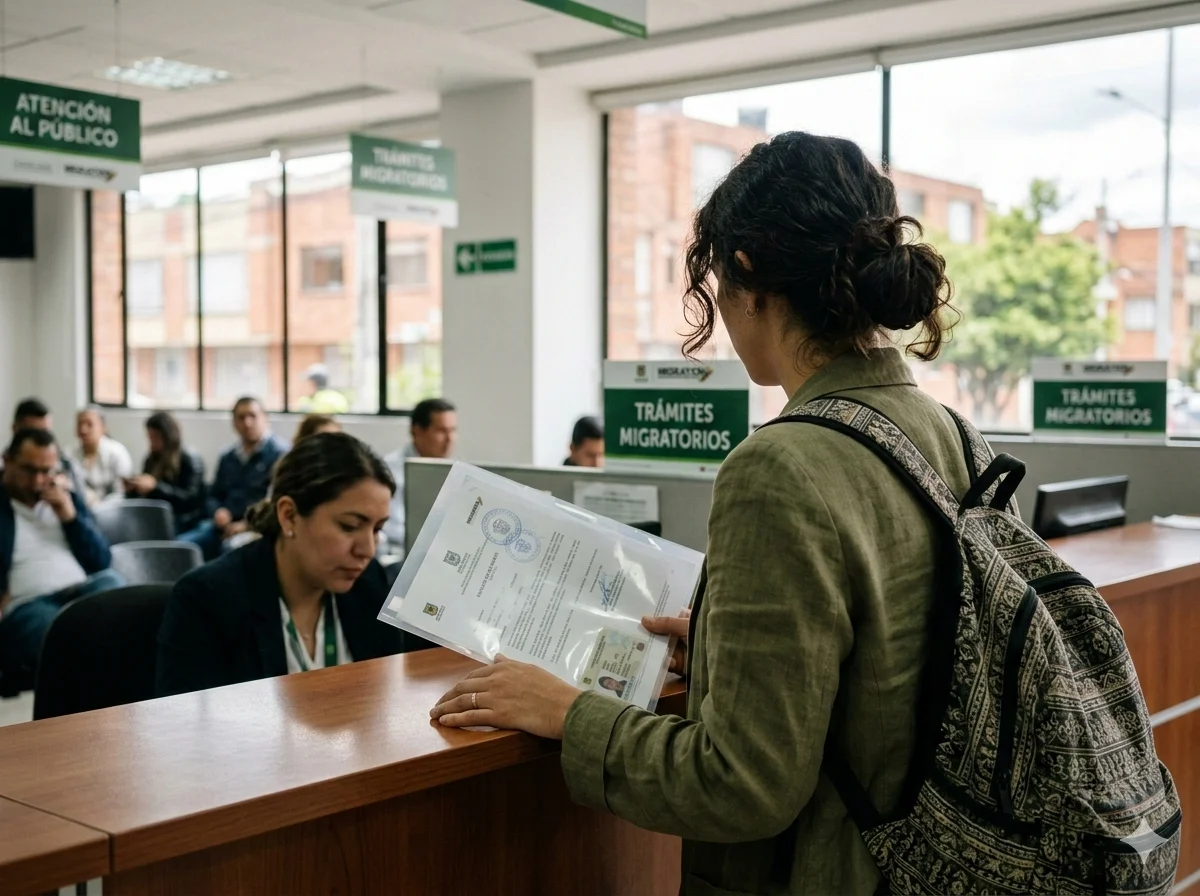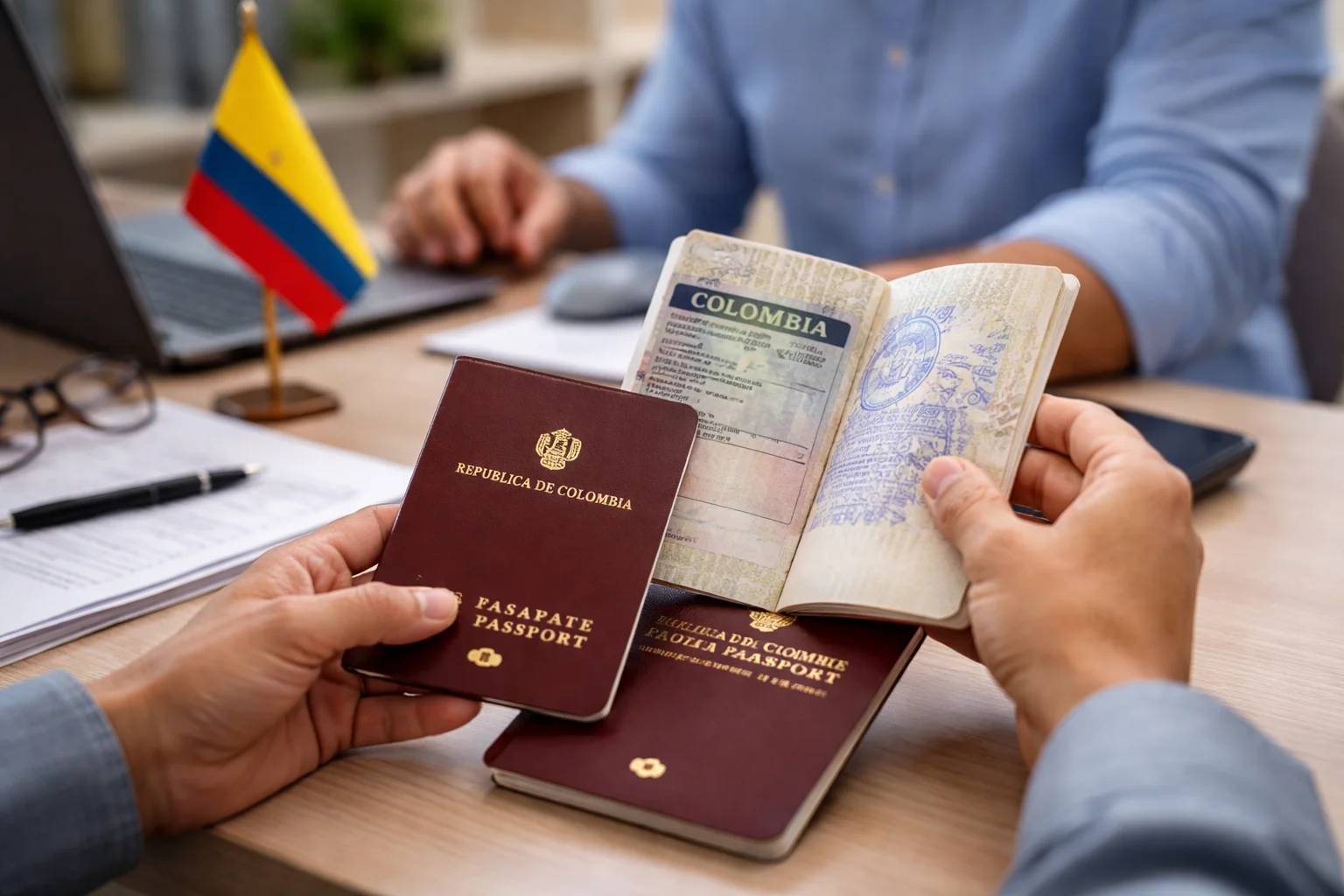
A visa denial does not mean your Colombia plans are over, but it does mean you need to change your approach immediately. Today, secure your denial notice, stop resubmitting the same file, and protect your lawful status while you rebuild the application. Preparation can take days to weeks, and government review can add additional time depending on the case. Legal review tends to prevent the most expensive mistakes when the denial is tied to document formalities, timing, or inconsistencies.
What to do in the first 24–72 hours after a Colombia visa denial
Treat the denial as a decision point, not a paperwork inconvenience. Colombia’s visa system is digital and discretionary, and there is no “automatic renewal” process—each request is effectively a new application that must stand on its own.
- Confirm what decision you received (denied vs. inadmissible) and download the notice for your records.
- Check your current immigration status and how many lawful days you have left to stay in Colombia.
- Identify whether the refusal was about missing documents, weak evidence, or contradictions across forms and attachments.
- Freeze your document set and start a clean version-control folder (so you do not mix old and new evidence).
- Decide whether the fastest path is a corrected reapplication, a different visa category, or an exit-and-reapply plan.
- If your case involves prior overstays, sanctions, family dependents, or complex income sources, consider legal review before paying fees again.
A controlled restart is almost always safer than rushing a second submission under pressure.

Denied and unsure what to fix first?
Share your denial notice details and target filing date to identify the highest-risk failure points early.
Denied vs. inadmissible: why the result changes what you can do next
Not all “rejections” behave the same way in Colombia. Some outcomes are essentially a request to correct deficiencies, while others function like a formal refusal with practical waiting and travel consequences.
| Portal outcome (common wording) | What it usually means | Practical next move | What can go wrong if you ignore it |
|---|---|---|---|
| Inadmissible | File was incomplete or a requirement was not properly met | Correct the deficiencies and reapply with a rebuilt packet | Repeating the same gaps triggers a second negative decision and more delay |
| Denied | Authority decided not to grant the visa based on the record presented | Reapply only with materially stronger evidence and a clearer legal basis | You may face a cooling-off period and may need to leave Colombia within a set time if you are in-country |
| Considered withdrawn | The process died due to missed payment deadlines or non-compliance | Restart with a full new submission and deadline controls | The same missed deadline repeats, wasting weeks and fees |
| Archived after approval stage | Issuance payment was not completed within the required window | Restart and treat payments like hard deadlines | Losing an approval can create credibility issues in later filings |
Your denial notice is the controlling document—use it to define the exact correction strategy.
Reapply strategy that actually fixes the denial
A successful reapplication is not a “resubmission.” It is a new file that resolves the refusal logic with stronger proof, cleaner formatting, and tighter consistency across every document and data field. If you want a fast way to validate your plan before you invest in new apostilles and translations, review online consultation with an immigration lawyer in Colombia (price and details).
- Replace weak evidence with stronger, verifiable documents (not just “more pages”).
- Refresh time-sensitive items (bank statements, police certificates, employer letters) so they are current at filing.
- Ensure apostilles/legalizations match the document type and issuing jurisdiction.
- Use certified translations when required, and keep names, dates, and identifiers identical across documents.
- Fix Formulario 4 issues (incomplete fields, contradictions, address/history gaps, inconsistent travel dates).
- Prepare a short, factual explanation that addresses the refusal ground without over-arguing.
- Build a “consistency check” page: passport name, document name formats, dates, addresses, and financial totals.
The goal is a file that reads as coherent and reliable on the first pass.
Timing and cost checkpoints for 2026 reapplications
Reapplication delays usually come from two places: document readiness and missed deadlines inside the online workflow. Colombia’s visa authority may take up to 30 days to decide a case after the process is properly in review, and payment windows can be tight—so timing control matters as much as document quality. For broader planning benchmarks, see Colombia visa processing time.
| Cost/timing item | Typical range (varies by case) | When it matters most | Denial risk if mishandled |
|---|---|---|---|
| File rebuild and document refresh | Days to weeks | Immediately after denial | Rushing creates contradictions and missing formalities |
| Government decision window | Up to ~30 calendar days is commonly cited | After fees are paid and the file is complete | Expiring entry status while you “wait it out” |
| Study/issuance fees | Varies by visa type (example: student visa shows separate study + issuance fees) | At submission and after approval | Missed payment deadlines can terminate the process |
| Certified translations (Colombia) | Often priced per word or per page; ranges are widely quoted | When any document is not in Spanish | Translation quality/format issues can undermine credibility |
| Home-country background checks | Depends on the country (example: FBI summary request fee is $18) | Visas requiring criminal record evidence | Incorrect format or rejected upstream processing delays the whole case |
| Status buffer inside Colombia | Depends on your stamp/visa validity | Before filing and during review | Overstay or last-minute salvoconducto creates avoidable risk |
Treat timing as a compliance requirement, not a project-management preference.
Common failure points that cause repeat denials
Most repeat denials are preventable. They come from predictable, technical issues that look minor to applicants but signal risk or unreliability to the reviewer.
- Apostille/legalization mistakes (wrong jurisdiction, missing formalities, or mismatched document versions).
- Translations that are unofficial, incomplete, or inconsistent with the source document.
- Financial proof that is technically “enough” but not credible (unclear income source, irregular deposits, missing support).
- Formulario 4 inconsistencies (addresses, dates, work history, prior visa answers that conflict with supporting evidence).
- Criminal record evidence that is expired, incomplete, or delayed due to rejected fingerprints in upstream systems.
- Missed deadlines in the online flow (study fee window, issuance fee window, or failure to answer additional requests).
- Compliance spillover from prior processes (unresolved fines, late registration, or status gaps that create red flags later).
Fixing these is less about volume and more about procedural precision.
Prefer your reapplication reviewed before you pay fees again?
We can verify documents, sequencing, and consistency so you avoid repeat setbacks and unnecessary delays.
When a lawyer prevents costly mistakes after a denial
If the denial is “document-level,” you can sometimes correct it alone. If it is “logic-level” (category fit, credibility, history, or discretion), professional review tends to save time and reduce repeat risk. For help evaluating your situation in the Colombian legal context, see immigration lawyer for Colombia.
| Situation after denial | Why it gets denied again | What legal review typically changes | What you should prepare |
|---|---|---|---|
| Financial insufficiency or unclear funds | Statements do not match the story or show unstable support | Builds a proof package that explains source, continuity, and legitimacy | Statements, contracts, pensions, tax support where applicable |
| Family-based or beneficiary issues | Weak relationship evidence or inconsistent civil records | Aligns civil documents, translations, and narrative consistency | Civil records, marriage/relationship evidence, dependency proof |
| Prior overstays, fines, or status gaps | Compliance history raises discretion concerns | Creates a status-first plan and reduces avoidable procedural exposure | Entry stamps, prior visas, sanction documentation, timelines |
| Work/investment documentation | Documents fail formalities or do not meet category thresholds | Clarifies category fit and strengthens evidentiary structure | Corporate docs, contracts, bank proofs, filings supporting the basis |
| Criminal record complications | Wrong certificate format, timing issues, or incomplete disclosures | Coordinates record strategy and formalities without over-disclosure | Police certificates, court outcomes, explanations where appropriate |
The right value of counsel is not “more documents”—it is better sequencing, better proof, and fewer technical errors.
Options if you are denied again
A second denial is a signal to change the approach materially. Colombia’s visa authority retains broad discretion in visa decisions, so practical strategy matters.
- Reapply only when you can add meaningful new evidence that addresses the refusal ground.
- Change visa category if your facts fit another pathway more cleanly (work, family, investment, study, or visitor options depending on your profile).
- Exit Colombia and reapply with stronger documentation if your status buffer is tight or the denial implies in-country risk.
- Build a “compliance reset” if prior status issues exist (resolve fines, document lawful presence, and avoid last-minute filings).
- Use a legal strategy call to identify whether the problem is evidence, category fit, or discretionary risk—then rebuild accordingly.
The objective is not speed; it is a denial-proof record that matches the legal basis of the visa sought.
After a Colombia Visa Denial: How Stanford Baker & Associates Helps
A visa denial is usually fixable when you respond with the right strategy—not a rushed resubmission. Stanford Baker & Associates helps you pinpoint what caused the refusal and rebuild a cleaner, more credible reapplication aligned with Colombian immigration requirements.
- Denial diagnosis based on the notice and your full document set
- Evidence strengthening to address credibility, category fit, and inconsistencies
- Document control: formatting, naming, translations, and apostille sequencing
- Deadline management to avoid missed payment windows and process termination
- Case-by-case risk spotting (prior immigration history, status gaps, record issues)
The goal is practical: correct the real failure points, reduce repeat-denial risk, and move forward with a structured plan.
Turn a Refusal into a Workable Plan
A denial is often the result of fixable technical gaps, weak proof, or inconsistencies that can be corrected with a disciplined reapplication strategy. Stanford Baker & Associates can help you diagnose the refusal logic, prioritize the right evidence, and coordinate a Colombia-ready submission designed to reduce repeat risk and protect your timeline.
Do you want a clear, document-based plan before you reapply and risk another denial? Stanford Baker & Associates can help you rebuild your case with practical guidance tailored to Colombia’s visa process.