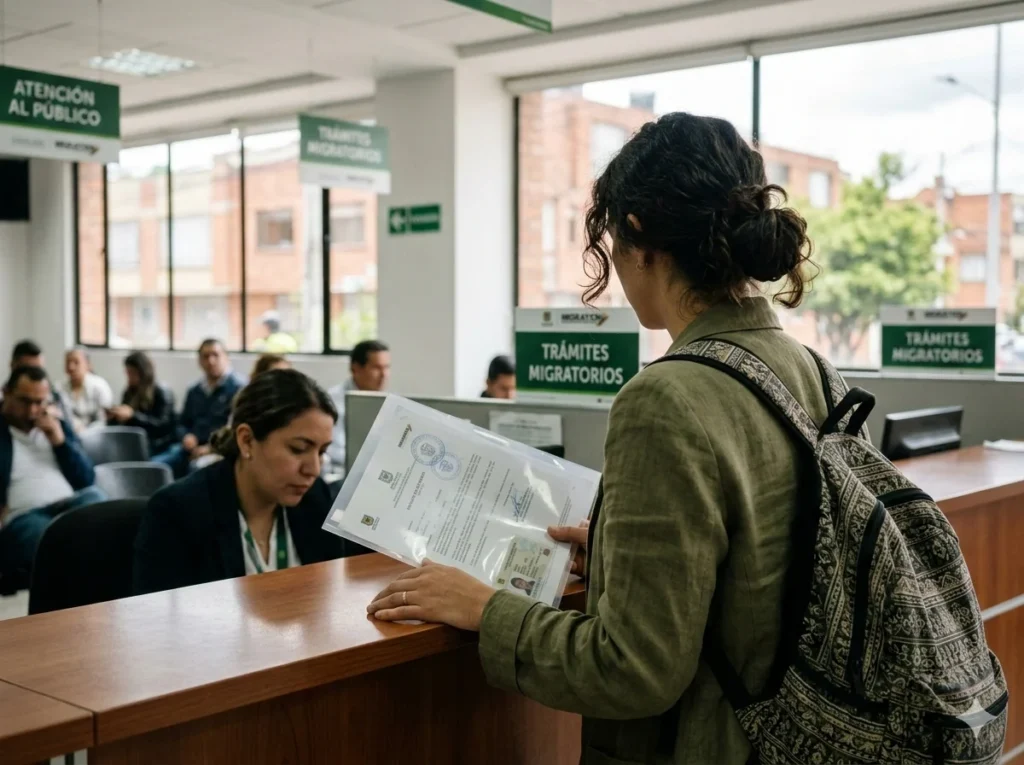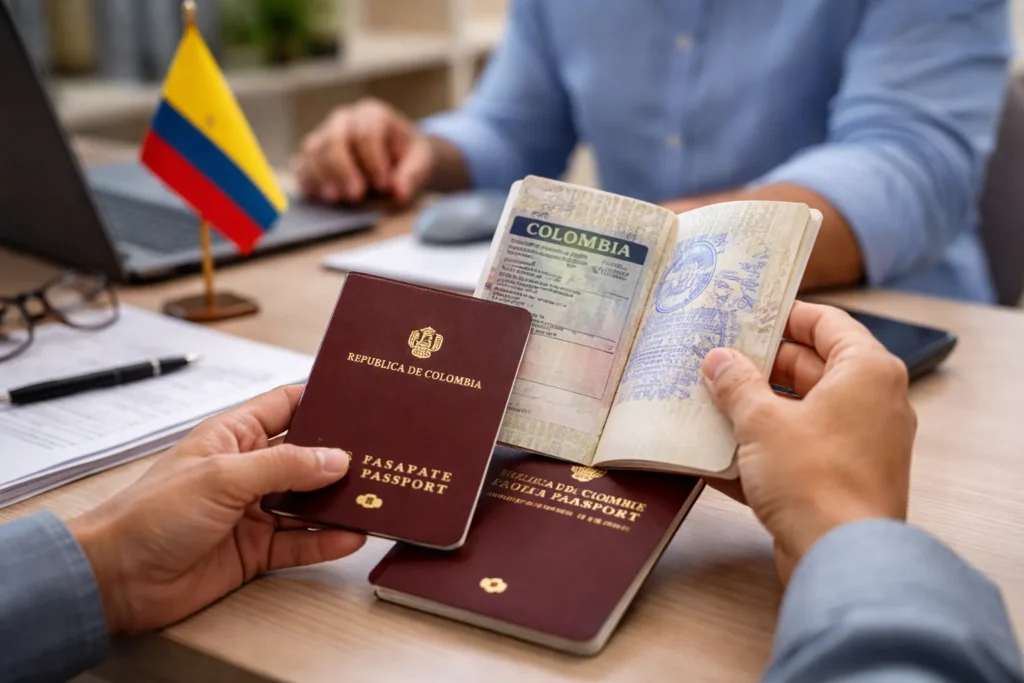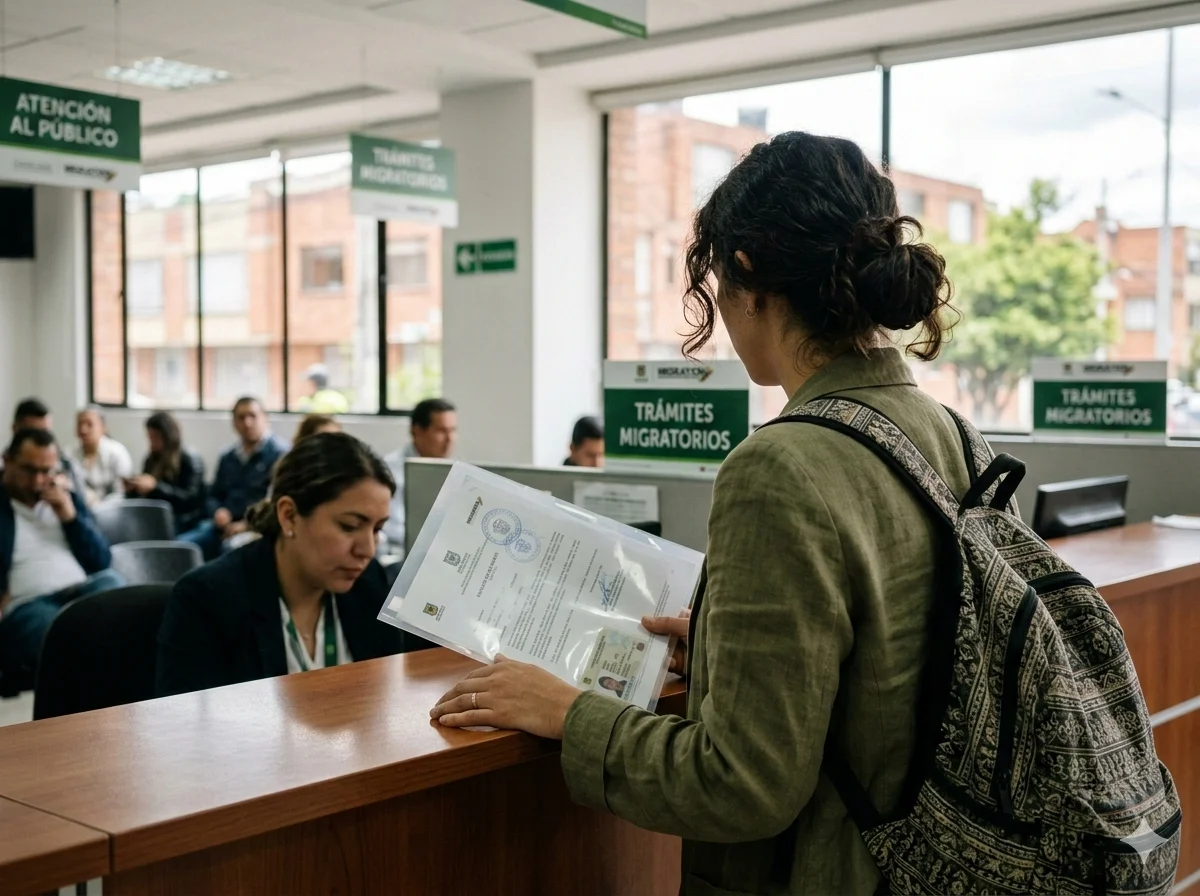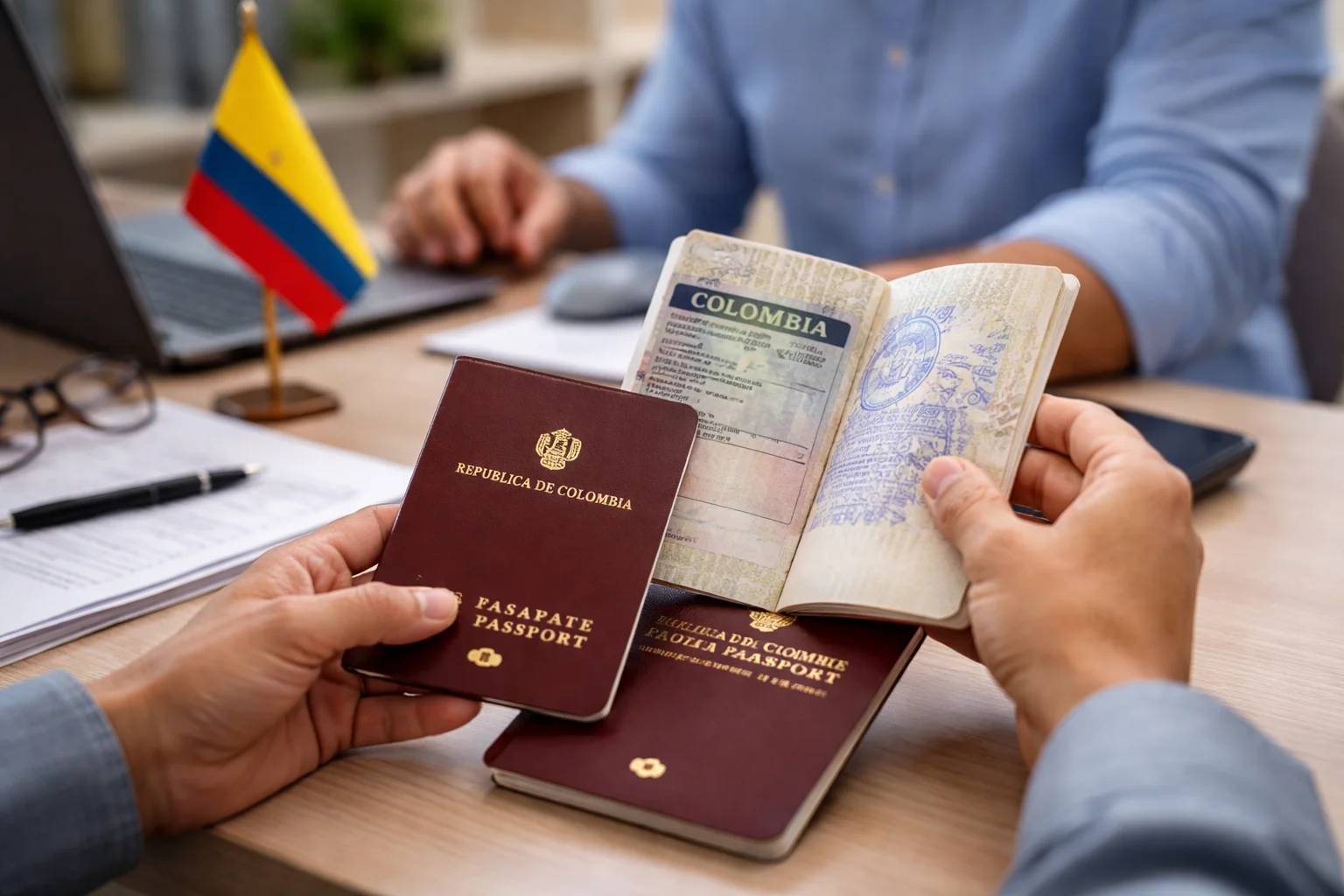
Colombian nationality law gives foreigners four practical routes to Colombian citizenship: by birth (born in Colombia), by descent (born abroad to a Colombian parent), by marriage, or by naturalization as a long-term resident. What changes between pathways is usually where the case is registered (civil registry/consulate vs in-country filing), whether residence time is required, and whether you must complete an interview/exam and provide criminal background checks. This guide explains each route, the typical documents that support it, and the step-by-step process foreigners follow to apply—plus common pitfalls to avoid.
What Colombian nationality law covers
Colombian nationality law defines:
- What happens after approval (citizenship certificate → cédula de ciudadanía → passport)
- Who qualifies for citizenship (by birth, descent, marriage, or naturalization)
- What must be proven (civil registration, legal residence continuity, good conduct, language/civics integration)
- Which authority process applies (registration vs naturalization procedure)
Citizenship pathways overview
| Pathway | Who qualifies | Key requirement that “unlocks” the route | Typical evidence | Timing notes (general only—verify current rules) |
|---|---|---|---|---|
| By birth (born in Colombia) | People born in Colombia when at least one parent is Colombian or a legal resident | Proper civil registration of the birth | Colombian birth registration, parent ID/status proof | Usually a registration-driven route (not “residency years”) |
| By descent (born abroad) | People born outside Colombia with at least one Colombian parent | Registering the birth in Colombian civil records (often via consulate) | Long-form foreign birth certificate + apostille/translation; Colombian parent’s ID/passport; consular registration | Depends heavily on correct civil registration and document chain |
| By marriage | Foreign spouse of a Colombian citizen | Marriage legally recognized/registered in Colombia + required residence/continuity | Marriage certificate/registration + residence proofs + background checks | Often has a reduced residence requirement vs standard naturalization |
| Naturalization (foreign residents) | Foreigners with qualifying, continuous legal residence | Meeting the residence threshold + good conduct + integration assessment | Visa/residence records + background checks + income/insurance proofs | Thresholds can vary by nationality/family ties—confirm current rules |

Not sure which citizenship route fits your case?
We help you choose the correct pathway (birth/descent vs marriage vs naturalization), confirm eligibility, and build a document strategy to reduce delays and avoid rejections.
Route 1 and 2: Citizenship by birth or descent
Instead of treating these as separate “citizenship types,” it’s easier to think of them as citizenship based on connection to Colombia through birth and parentage.
A) Born in Colombia (birth in territory)
You may qualify as a Colombian citizen if you were born in Colombia and at least one parent was a Colombian national or a legal foreign resident at the time of birth. In practice, this route is often about civil status proof: getting the birth properly recorded and ensuring the parent’s qualifying status is documented.
B) Born abroad to a Colombian parent (descent)
If you were born outside Colombia and have at least one Colombian parent, you can often formalize citizenship through civil registration (commonly via a Colombian consulate, then reflected in Colombian civil records). The key is proving the parent’s Colombian nationality and ensuring the birth record is properly registered.
Quick clarification (no jargon):
- “Born in Colombia” focuses on birthplace + parent status
- “Born abroad” focuses on parent nationality + consular/civil registration
Documents you’ll typically prepare (descent cases)
- Long-form birth certificate (apostilled and translated into Spanish if issued abroad)
- Proof of the Colombian parent’s nationality (cédula de ciudadanía or Colombian passport)
- Evidence of consular/in-country registration of the birth in Colombian civil records
Route 3: Citizenship by marriage
Foreign nationals married to Colombian citizens may qualify through a marriage-based naturalization pathway, typically with a reduced residence requirement compared to standard naturalization. The marriage must be legally recognized in Colombia (registered locally or validated if celebrated abroad), and applicants should be prepared to show the relationship is genuine and ongoing.
What you’re usually expected to show
- Marriage recognized/registered under Colombian rules
- Continuous residence for the required period (varies—verify current rules)
- Clean legal record
- Economic stability and integration (Spanish/civics)
To explore more about the advantages of becoming a Colombian citizen, you can read this article on the benefits of Colombian citizenship.
Route 4: Naturalization for foreign residents
Naturalization is the route for foreigners who have built long-term legal residence in Colombia and want full citizenship rights and responsibilities.
Core requirements (typical)
- Legal residence continuity for the required period (threshold can vary; reductions may apply by nationality or family ties—verify current rules)
- Good conduct (clean criminal record and compliant immigration history)
- Economic stability (work/income proof)
- Health coverage (public or private, depending on the requirement framework)
- Spanish + basic civics/Colombia knowledge, often assessed by interview and/or exam
If you’re still in the process of meeting the residency period, you may need to review the Colombian resident visa requirements to maintain continuous legal status before applying for citizenship.
Document checklist (by route)
| Route | Civil registration / consulate | Marriage documents | Residence continuity evidence | Background checks | Apostille / translation |
|---|---|---|---|---|---|
| Birth (born in Colombia) | Colombian civil birth registration + parent status proof | N/A | Usually not the “core” of this route | May be requested depending on process stage | Needed only if foreign docs are used |
| Descent (born abroad) | Consular registration + long-form birth certificate | N/A | Not usually the core element | Sometimes requested | Foreign birth certificate typically needs apostille + Spanish translation |
| Marriage | N/A (unless civil status updates apply) | Marriage certificate + Colombian registration/recognition | Proof of continuous residence (leases, bills, migration records, entries/exits) | Colombia + home country (as applicable) | Foreign marriage docs typically apostille + translation |
| Naturalization | N/A | N/A (unless applying with Colombian spouse/children as basis) | Visa history, migration records, proof of domicile | Colombia + home country (as applicable) | Any foreign-issued supporting docs typically apostille + translation |
Practical note: If a document is foreign-issued, assume you must check whether it needs apostille/legalization and a certified Spanish translation—these are among the most common delay points.
How to Apply for Colombian Citizenship (Step-by-Step)
Below is the process most foreigners follow across routes. The exact steps and evidence vary depending on whether your case is civil registration-driven (birth/descent) or naturalization-driven (marriage/naturalization).
Application checklist (step → what to deliver → common mistakes)
| Step | What you provide / do | Common mistakes that cause delays |
|---|---|---|
| 1) Confirm eligibility | Identify your pathway and confirm you meet the key threshold (registration, marriage + residence, or residence years) | Starting the wrong route; assuming tourist time counts the same as legal residence |
| 2) Build a document pack | IDs, civil registry records, residence proofs, background checks, income/insurance docs | Missing apostilles; outdated certificates; inconsistent names/dates; incomplete translations |
| 3) Prepare for interview/exam (if required) | Spanish functionality + basic civics knowledge (as applicable) | Underpreparing; not knowing the required documentation format for evaluation |
| 4) Submit the application | File with the competent authority for your route and submit supporting evidence | Uploading unclear scans; missing required forms; using expired background checks |
| 5) Respond to requests | Provide clarifications or additional documents if requested | Slow responses; submitting mismatched documents; not maintaining status continuity |
| 6) Oath / finalization (if applicable) | Attend oath/ceremony when approved and complete final steps | Not tracking instructions; travel plans interfering with deadlines |
| 7) After approval | Apply for citizenship certificate → cédula de ciudadanía → passport | Delaying cédula steps; assuming passport timing is immediate |
To better understand timelines, you can also check this article on how long it takes to get a Colombian passport.
Benefits & Common Mistakes
Gaining citizenship marks a significant milestone for any foreign resident who has chosen to make Colombia their home. Beyond the legal recognition, it opens the door to long-term stability, greater freedom, and the ability to fully participate in the country’s social and economic life. Understanding the main benefits, typical timelines, and common mistakes can help applicants prepare more effectively and avoid unnecessary delays.
Benefits at a glance
- More stable long-term status (no routine visa renewals once you’re a citizen)
- Full civil and political rights (where applicable)
- Easier family-based processes in many situations
- Better administrative ease (banking, contracts, travel documentation)
Dual nationality
Colombia generally allows dual citizenship, meaning many applicants are not required to renounce their original nationality—but this also depends on your home country’s rules, so you should confirm your country’s position before applying.
Frequent pitfalls to avoid
While the process of acquiring Colombian citizenship is straightforward when well-prepared, there are several common mistakes that can lead to delays or even rejections. Avoiding these pitfalls will help ensure a smoother and faster application:
- Broken residence continuity: gaps, lapses, or prolonged absences can affect eligibility or “reset” the practical timeline depending on your pathway and facts.
- Weak document integrity: missing apostilles, non-certified translations, or outdated police certificates.
- Mismatch between evidence and claims: income proofs that don’t match bank records, inconsistent addresses, or missing migration evidence.
- Underestimating interview/exam expectations: especially civics basics and Spanish functionality if required.
Avoid document mistakes that delay citizenship approval
We review apostilles, certified translations, background checks, and continuity evidence—so your application meets Colombian requirements from the first submission.