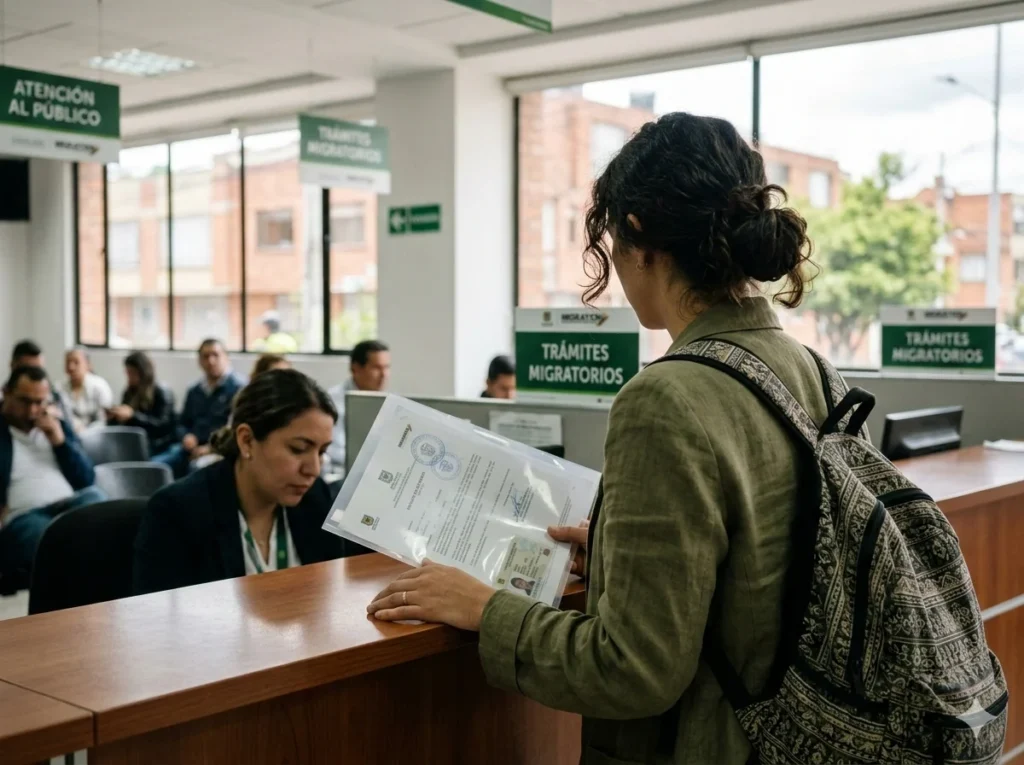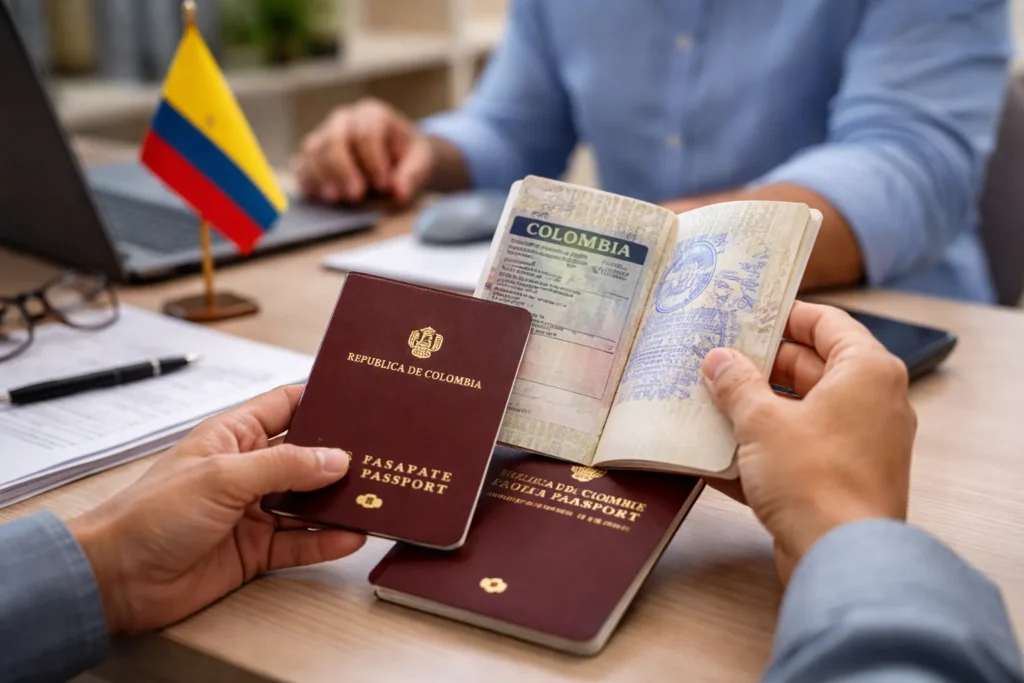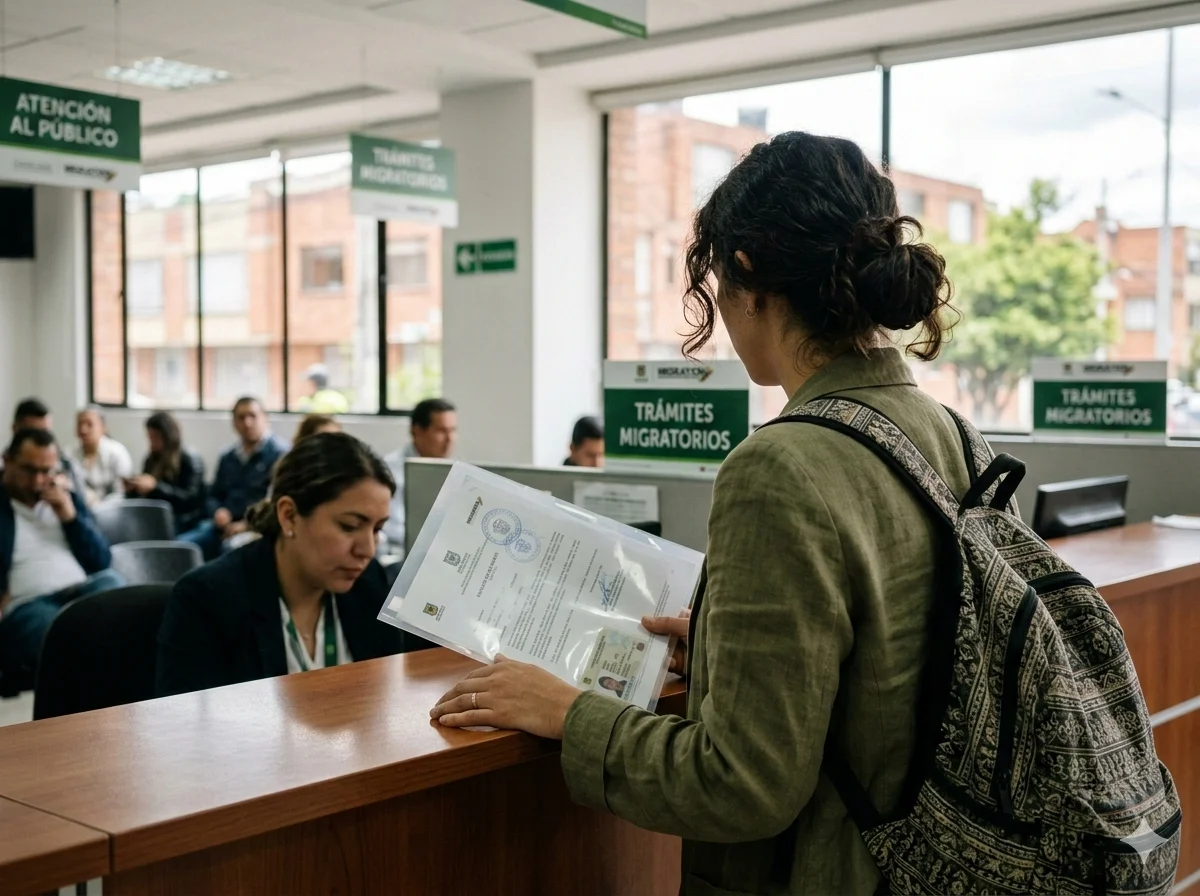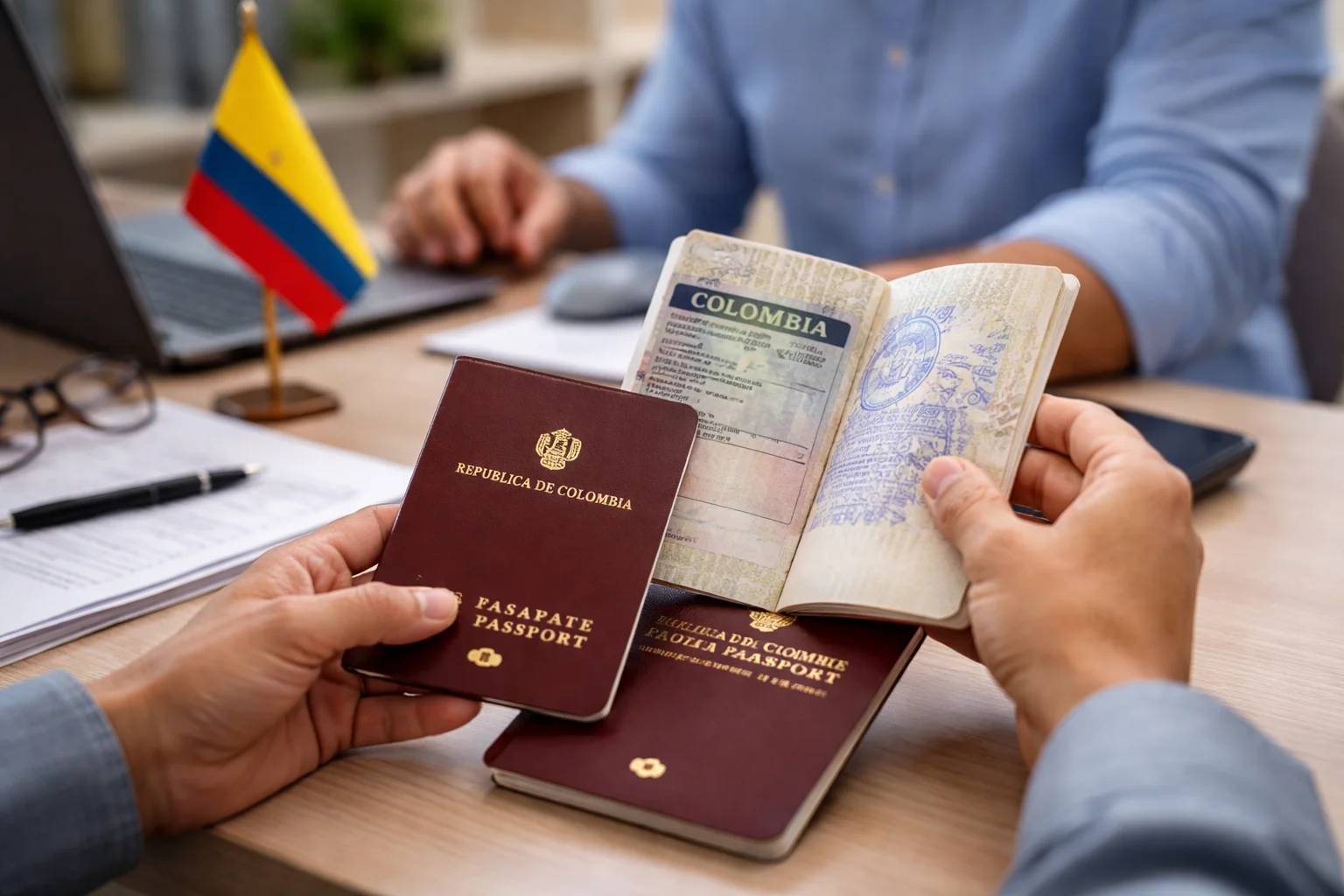
Criminal background checks for Colombia visas are mandatory for residency, marriage, and investment categories, typically requiring a national-level certificate issued within the last 90 to 180 days. To be valid, these records must be apostilled (or legalized) and accompanied by an official Spanish translation from a court-certified translator. In this guide, you will find the specific “validity windows” by visa type, how to fix common rejection triggers like municipal-level documents, and the step-by-step verification process used by Colombian migration officers.
When are Background Checks Required?
Criminal Background Checks for Colombia Visas are explicitly mandatory for certain categories and discretionary for others.
-
Mandatory: Resident, Marriage-based, Investor, and long-term work permits.
-
Discretionary: Extensions, humanitarian cases, or digital nomad visas where risk indicators exist.
-
Triggers for Requests: Inconsistencies in names/birthdates, unexplained residency gaps, or cross-border alerts.
Actionable Recommendation: Include a supplemental statement reconciling name variations or travel gaps to prevent discretionary requests.
How Colombian authorities verify judicial records
Authorities use a multi-layered verification system to assess the validity of your certificates.
-
Domestic Databases: Flagging systems from the Policía Nacional and the Unidad de Información y Análisis Financiero.
-
International Channels: Mutual legal assistance treaties, Interpol, and direct contact with issuing states.
-
Apostille Verification: Officers often check online public registries to match the apostille serial number with the issuing country’s database.
Why applicants still need a certificate from the correct authority in the correct form
Even where an issuing country could theoretically share data electronically, Colombian visa adjudicators prefer, and frequently require, a formal certificate issued by the specific authority named in the visa checklist. The reason is legal reliability: an original certificate with the correct seal and signature establishes the chain of custody and the legal provenance of the record. Certificates from police departments, ministries of justice, or central judicial registries are treated differently; supplying a local police memo when the law expects a central judicial certificate will likely generate a request for correction.
For example, a resident visa checklist might require a ‘criminal record certificate issued by the national police or ministry of justice’ rather than a municipal police note; if an applicant provides a municipal document, the visa office will treat it as incomplete. Actionable recommendation: read the specific visa checklist language carefully and obtain the certificate from the named national-level authority even if a municipal or regional document appears faster to acquire.
Formalities: apostille, legalization and translation requirements
Apostille and legalization: whether a judicial certificate needs an apostille or full consular legalization depends on whether the issuing country is party to the Hague Apostille Convention. Most supporters of electronic and paper independence in Latin America, North America and Europe are apostille members; where the issuing country is not a member, the document must be consularly legalized through the issuing country’s MFA and the Colombian consulate or embassy. The apostille authenticates the signature and seal of the issuing authority and is often attached directly to the document or issued as a separate sheet.
Translations: when a foreign certificate is not in Spanish, Colombian migration authorities require a certified translation. The translator should be a sworn or ‘traductor oficial’ recognized by Colombian courts, or a translator certified by the issuing country and then legalized/apostilled when required. In practice, many states accept a translation performed by a translator sworn before a Colombian court, which avoids additional legalization steps. Practical example: a US FBI certificate translated by a translator certified by the Colombian court will be accepted without extra legalization; a private translation without certification risks rejection. Actionable recommendation: plan for a sworn translation by a Colombian-registered translator when the original certificate is in another language and include the translator’s identification and signature page as part of the submission.
Common apostille/legalization mistakes
Typical errors include attaching an apostille issued for a different document, forgetting to apostille the translation when the translation itself requires a legalization chain, or presenting scanned apostilles with insufficient resolution so stamps cannot be read. Another frequent issue is presenting an apostille issued on a photocopy when the authority requires it on the original document. Practical example: an applicant provided a low-resolution scan of an apostille for a police certificate; the visa officer could not confirm the apostille serial and demanded the original apostilled certificate, delaying the application. Actionable recommendation: always secure a high-quality color scan of the original certificate and apostille as a backup and retain the apostilled original for submission when required.
Understanding the ‘validity window’ for background certificates
The validity window concept is not a uniform legal rule; it is an administrative expectation set by the reviewing officer or the issuing visa checklist. In practice, many Colombian visa routes expect certificates issued within 90 to 180 days of the application or of a specific processing milestone (for example, the date of the visa appointment). The underlying rationale is straightforward: criminal records can change, and a certificate older than the officer’s accepted window may not reflect recent arrests or resolutions.
That said, the apostille itself does not determine validity; apostille confirmations only attest to authenticity as of the apostille date. A document apostilled two years ago can still be authentic, but the visa officer may judge it stale. Practical case: for a marriage-based resident visa, the migration unit required a certificate dated within 90 days of the filing; an applicant submitted a perfectly valid police certificate apostilled six months earlier and received a request to bring a new certificate. Actionable recommendation: obtain certificates as late as feasible within the application timeline and confirm the visa checklist’s explicit validity window; when in doubt, secure a certificate dated within 90 days of your submission or appointment.
| Element | What officers check | Typical expectation |
|---|---|---|
| Issuing authority | Matches the authority named in checklist | National ministry/police registry |
| Apostille/legalization | Apostille valid or consular legalization | Apostille if Hague signatory |
| Translation | Sworn/official Spanish translation | Traductor oficial or Colombian sworn translator |
Rejection triggers you can fix: document-type, apostille, translations and consistency
Many refusals hinge on technical defects that are remediable if you act quickly. Typical fixable triggers include: wrong certificate type (municipal certificate provided where a central judicial record was required), missing apostille or legalization, translations that are not sworn or lack the translator’s registration details, identity mismatches across documents, and certificates that do not match the applicant’s declared residency history.
- Wrong certificate type: If the checklist requires a ‘certificado de antecedentes emitido por el Ministerio de Justicia’ but you bring a municipal police letter, the office will request the correct national certificate. Fix: contact the issuing country’s central registry and request the national-level extract; include a short explanation letter linking the new certificate to your original submission.
- Missing apostille or legalization: If the issuing country is an apostille member, and you submit an un-apostilled certificate, the visa office will deem it unauthenticated. Fix: obtain the apostille and resubmit; many applicants prioritize this during their application window to avoid delays.
- Translation not recognized: Submissions occasionally include translations done by uncertified translators. Fix: obtain a sworn translator’s version and have the translation signed and stamped by the translator with registration info; where required, legalize the translator’s signature.
- Inconsistent identity data: different spellings, absent middle names, or divergent birthdates cause confusion. Fix: supply a notarized affidavit explaining the variations and include official documents showing the different name usages (passport, national ID, marriage certificate).
Practical example: an applicant for a resident visa received a request because their Spanish translation lacked the translator’s registration number; after obtaining a sworn translation and reuploading it, the application proceeded. Actionable recommendation: build a verification checklist mapping each document requirement to its issuing authority, required apostille/legalization, and translation standard before you submit.
Substantive issues: criminal records and unresolved legal status
Substantive problems are qualitatively different and typically cannot be ‘‘fixed’’ by supplying another certificate or translating a page. They include a current, adjudicated criminal conviction for offenses that under Colombian migration law are grounds for inadmissibility, outstanding warrants, or unresolved extradition or immigration bans. In these cases, the decision is not procedural but material: the visa may be denied on public policy or public safety grounds.
However, even substantive matters have nuances. Some convictions are time-limited for exclusion depending on the offense and whether the applicant can demonstrate rehabilitation, sentence completion, or legal record expungement. Practical case: an applicant with a decade-old misdemeanor in a European country submitted court records showing sentencing and completion; the migration office considered rehabilitation evidence and granted a discretionary permit. Actionable recommendation: if a substantive issue exists, obtain full court records, certified translations, and a legal memorandum explaining the conviction’s legal nature and finality to present mitigating evidence during the application or an administrative appeal.
Step-by-step preparation for Criminal Background Checks for Colombia Visas
Follow this procedural checklist to minimize risk of rejection and unnecessary delays: identify the exact certificate named in the visa checklist; obtain the certificate from the named national authority; request an apostille if the issuing country is a Hague signatory or consular legalization otherwise; secure a sworn Spanish translation that includes the translator’s registration; confirm the issuing date falls within the expected validity window; reconcile identity variations with a signed affidavit and supporting documents; include a short cover letter that maps each certificate to the visa requirement and highlights any potential discrepancies.
When you prepare documents for a digital nomad or other temporary visa, check the specific checklist because some routes accept police certificates issued in the applicant’s current residence country only while others ask for all countries of residence. For practical guidance on one particular route, review the Colombia digital nomad visa requirements, where document expectations and common pitfalls are summarized and compared to resident and other temporary options.

Talk to an English-speaking Colombia lawyer
Get clear, step-by-step legal guidance for visas, property, family and business matters in Colombia. We review documents, reduce risk, and represent you when needed. Send your details and we’ll respond with next steps.
Specific expectations for resident and long-term visas
Resident visas and long-term permissions typically have stricter verification rules for criminal background checks for colombia visas. Migration offices expect a full judicial history from every country where the applicant has lived for a specified period (commonly six months or more), often with national-level certificates and apostilles. The emphasis on national certificates is stronger for resident categories because residency implies ongoing settlement and a closer link to public security assessments.
If you are preparing an application that seeks permanent or long-term residency, consider the guidance for resident routes and their document norms: many applicants benefit from reviewing published procedural notes for resident applicants. See a practical outline of the procedural timelines and requirement differences in the article about Colombian resident visa requirements.
Timing, processing and what to expect during review
Processing time for background-check-heavy applications can be longer than the baseline visa processing because of the need for international verification. Some countries issue apostilles quickly while others require a mail-in process that can take weeks. Colombian officers may also place administrative holds to verify a single document, which extends the total visa timeline. Practical example: an investor visa application was otherwise complete, but a police certificate from a third country had to be verified with the issuing ministry by diplomatic channel; this added several weeks to the process. Actionable recommendation: allow extra time in your immigration timeline for certificates to be requested, apostilled and, where necessary, verified by diplomatic channels.
To understand common processing duration benchmarks, compare your case against published processing time averages and known bottlenecks to set realistic expectations and decide whether to initiate parallel processes, like provisional document submission or an appeal. If you would like context on processing benchmarks, review our guide on typical timelines and factors that affect review in the article about Colombia visa processing time.
Talk to an English-speaking Colombia lawyer
Get clear, step-by-step legal guidance for visas, property, family and business matters in Colombia. We review documents, reduce risk, and represent you when needed. Send your details and we’ll respond with next steps.
When to consider legal representation or pre-submission review
Professional legal review is highly cost-effective for complex cases involving multiple jurisdictions, past criminal records, or inconsistent identity data. A specialized lawyer performs a pre-submission audit to confirm the issuing authority, verify apostille requirements, and ensure the 90-day validity window is met. This proactive approach prevents sequential requests and reduces the risk of visa rejection.
Expert Tip: If your history includes residency in more than two countries or a prior conviction, arrange a document review before filing to draft necessary mitigation statements.
Reduce risk by following precise formalities and anticipating verification
To minimize delays when preparing criminal background checks for Colombia visas, success depends on four technical pillars: obtaining the correct national-level certificate, securing a valid apostille, using a court-certified translation, and submitting within the administrative validity window. While technical errors are easily fixed, substantive legal issues require a robust strategy. Early investment in legal review materially reduces processing times and secures your path to residency.