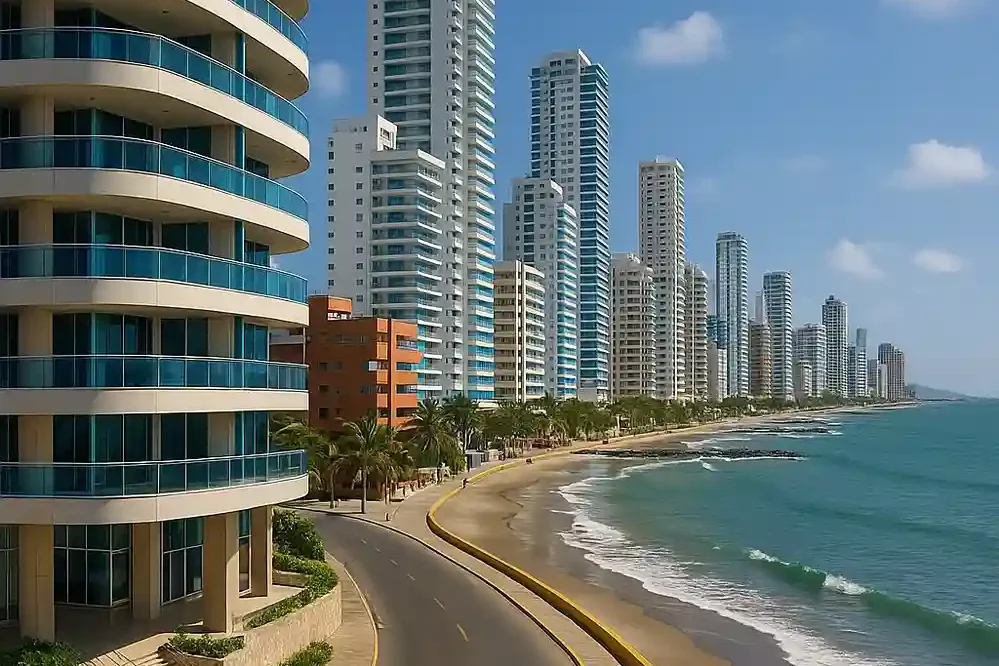
If you’re looking for homes for sale in Cartagena Colombia South America, you’ll typically find high-rise condos near the beach, residential apartments around quieter lagoons, and luxury properties in more exclusive zones. Most purchases follow a predictable sequence—offer and due diligence first, then contract, closing, and registration—although timing and costs vary by property, building rules (PH), and documentation readiness (so there are no one-size-fits-all promises). The legal “must” is non-negotiable: title due diligence (estudio de títulos) before money is committed, a clear promesa/contract, escrituración at a notary, and final registration to perfect the transfer.
In this guide, we break down where to buy (by beach zone), what to verify in the property title, and how tourist/short-term rental rules can affect your investment strategy in Cartagena.
Cartagena’s Beach Zones: choose the right neighborhood fit
Cartagena’s coastal neighborhoods don’t feel the same—and the “best” option depends on your lifestyle, budget structure (cash vs financing), rental plans, and tolerance for tourist density.
Neighborhood fit (Bocagrande vs El Laguito vs Castillo Grande)
| Neighborhood | Best for | Typical property types | Pros | Cons / watch-outs |
|---|---|---|---|---|
| Bocagrande | Buyers who want walkability, services, and a modern skyline | High-rise condos, serviced buildings, some furnished units | Beach access, restaurants, shopping, easy day-to-day living | Higher tourist traffic; building rules (PH) can be stricter; admin fees can be significant |
| El Laguito | Quieter vibe near water, families/retirees, longer stays | Apartments and residential buildings, some mid/high-rise | More residential feel; still close to attractions | Inventory varies by building age; confirm maintenance standards and building financial health |
| Castillo Grande | Privacy + premium positioning | Upscale condos and higher-end residences | More exclusive atmosphere; calmer streets in many spots | Often higher price points; verify building rules for rentals and guests carefully |
Even though Cartagena is one of the most stunning cities in the country, it’s not the only great place to invest in. If you’re open to exploring other destinations for property investment, take a look at our guide to the safest places to live in Colombia and discover additional areas that offer security, lifestyle, and investment potential.
Property titles in Cartagena: protect your purchase before you commit
Buying property safely in Cartagena isn’t about “trusting the listing.” It’s about verifying the legal chain and the property’s obligations before you sign or transfer funds.
Key concept (in plain terms)
- Title due diligence confirms the seller can legally sell, and the property can legally transfer without hidden claims.
- A “clean-looking” listing does not equal a “clean” title.
Legal due-diligence checklist
| What to verify | Why it matters | What to ask for / review |
|---|---|---|
| Certificado de tradición y libertad | Confirms ownership history and legal status | Most recent certificate + confirm seller matches registered owner |
| Certificado de gravámenes / encumbrances | Detects liens, mortgages, lawsuits, or recorded claims | Verify no outstanding debts or measures affecting transfer |
| Property Horizontal (PH) rules (if condo/apartment) | Building bylaws can restrict rentals, guests, renovations, pets | Reglamento de propiedad horizontal + internal policies |
| Administration fees + building financial health | Admin arrears or weak reserves can become your problem | Paz y salvo de administración + fee breakdown + arrears confirmation |
| Property taxes and utilities status | Unpaid obligations can delay closing or create disputes | Paz y salvo predial + utility statements (where relevant) |
| Promesa (promise-to-purchase contract) | Sets price, timelines, deposits, penalties, and closing conditions | Clear clauses for title findings, deadlines, refunds, penalties |
| Escrituración (notary deed) | Makes the sale legally formal and enforceable | Notary process + final deed review |
| Registro (registration after notary) | Without registration, transfer is not fully perfected | Confirm post-notary registration steps and proof |
Micro-tip: If you’re buying an apartment, always treat PH rules + administración as part of “title safety,” not a separate afterthought. They directly affect short-term rentals, renovation limits, and monthly carrying costs.

Buying real estate in Colombia?
Our legal team helps you verify property titles, review contracts, and ensure safe transactions for foreign investors.
Tourist rules and short-term rentals in Cartagena (if this is your plan)
Many buyers consider using a property part-time and renting it short-term when they’re away. That can be viable, but it’s not “set-and-forget.” Your compliance depends on building rules (PH), local requirements, and operational safety expectations.
Short-term rental compliance checklist (and red flags)
| Item | Checklist (basic) | Red flags (pause and verify) |
|---|---|---|
| Building permission (PH) | Confirm PH explicitly allows short-term rentals | PH prohibits rentals under X days; heavy fines; strict guest limits |
| Registration / local requirements | Ask what registrations apply to your zone/building | “No need to register anything” (often an oversimplification) |
| Safety and suitability | Basic safety readiness (access, emergency info, standards) | Missing safety basics; unclear building policies for guests |
| Neighbor/HOA enforcement reality | Ask how rules are enforced in practice | Frequent disputes, complaints, or documented enforcement actions |
| Operating model | Decide: self-managed vs professional management | Owner is absent but no management plan; payment/keys handled informally |
Practical framing: Think of short-term rentals as a separate compliance layer on top of the purchase. Even if the title is clean, PH restrictions alone can block your intended use.
Cartagena Real Estate Investment Benefits
Cartagena can appeal to buyers for lifestyle (coastal living, strong visitor economy, historic charm) and for investment considerations (rental demand in certain zones). However, outcomes vary by building, legal structure (PH), seasonality, and your compliance setup—so it’s smarter to evaluate property-by-property rather than assume market-wide results.
On visas and residency
Buying property does not automatically grant a visa or citizenship. Depending on current immigration rules, real estate investment may support certain visa strategies, but eligibility is case-specific and documentation-driven. For personalized guidance on visa categories, eligibility, and documentation, explore the available immigration services in Colombia.
Ready to Invest in Cartagena’s Real Estate Market?
Investing in homes for sale in Cartagena Colombia South America can be a strong lifestyle move and—when structured correctly—a sound asset decision. The safest path is the boring one: pick the right neighborhood fit, verify titles and building rules, document every step in the promesa, then close through notary and registration with a clear paper trail. With Stanford Baker & Associates, you’ll have the expertise and support needed to make your property purchase in Cartagena secure and successful.