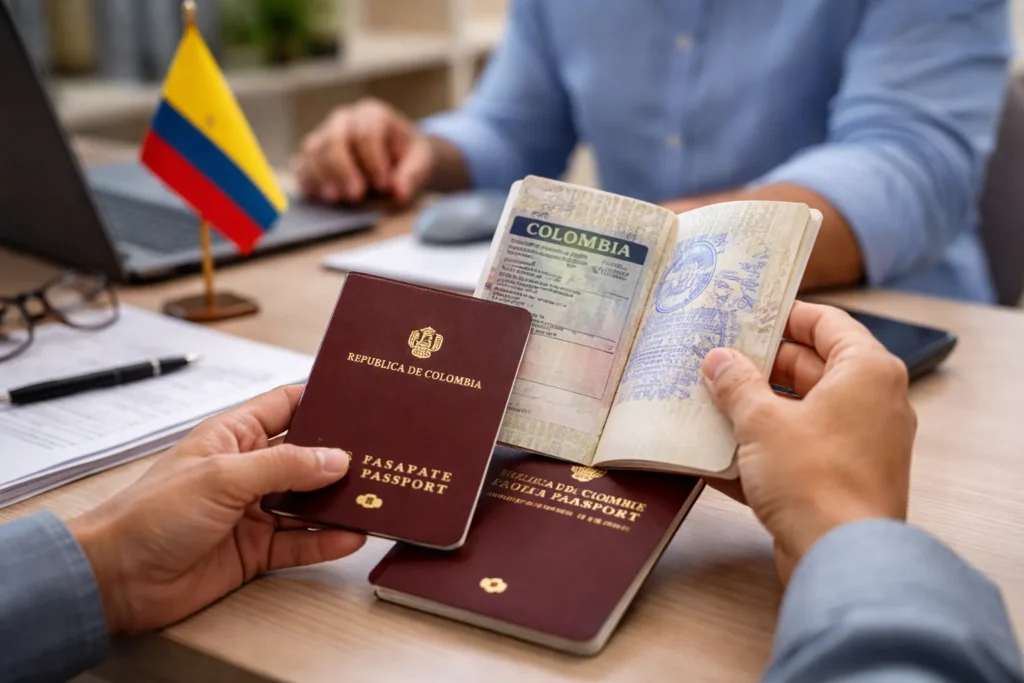
A salvoconducto in Colombia is a temporary administrative document that regularizes your status for a specific purpose: either to leave the country legally or to remain temporarily while resolving a pending immigration issue. It is typically issued for 30 days and serves as a vital bridge when a passport is lost or a visa is under review. In this guide, you will learn the difference between an exit and a stay permit, the essential evidence package required by Migración Colombia, and how to avoid the fines associated with overstaying while your permit is processed.
Nature and Legal Limits of the Salvoconducto
A salvoconducto in Colombia is a temporary administrative instrument designed to bridge documentary gaps, such as lost passports or visas under review. It certifies your legal ability to travel or remain temporarily but does not convert into a residency permit or a long-term visa. Because it is discretionary, there is no absolute right to obtain one; authorities grant it based on verifiable evidence and a concrete operational reason.
Important Restrictions and Infractions
It is critical to understand that a salvoconducto is a tactical fix, not a remedy for underlying immigration issues.
-
No Amnesty: It does not erase prior infractions, such as overstays, nor does it automatically nullify fines or removal orders.
-
Factual Record: The government maintains your full immigration history even if a temporary permit is issued for exit or stay.
-
Specific Conditions: Each document carries explicit limits on movement and a strict validity window that must be respected to avoid further legal action or inadmissibility findings.
Two broad purposes of a salvoconducto: exit versus stay/regularization
There are two principal, distinct purposes for which Colombian authorities issue salvoconductos. Understanding which category your situation falls into will change what documents you must present, where to apply, and what risks remain.
1) Exit: allowing a controlled departure
The first and historically common use of the salvoconducto is to permit an individual to legally exit Colombia when their passport or visa situation prevents ordinary boarding or passport control clearance. Typical triggers include a lost passport, a passport being held for administrative verification, a visa cancelled at entry inspection, or a refused boarding due to missing exit stamps. In these cases the salvoconducto functions as a short-term travel permit so the person can leave the country without being detained or formally expelled at the exit point. The document often specifies a single departure window.
When the objective is exit, you should be ready to show travel arrangements (a booked ticket, itinerary), proof of identity or pending replacement (police report for lost passport, consular receipt showing a new passport is in process), and evidence that authorities or a foreign consulate are working on the replacement. Authorities typically want assurance that your exit will resolve the immediate problem.
2) Stay or regularization: temporary permission to remain while processes are decided
The other broad purpose is to allow a person to stay in Colombia lawfully—temporarily—while an administrative or judicial immigration process unfolds. Examples include awaiting a visa approval by Migración Colombia, pursuing an appeal of a removal decision, pending family regularization petitions, or completing documentation required for a lawful status change. In these situations the salvoconducto is not about travel but about protecting the individual from immediate removal, arrest, or deportation by showing they have an active, legitimate process in train and must remain document-ready.
For stay/regularization salvoconductos, the authority will normally require evidence of the pending administrative step, a clear timeline, and proof you are participating in the process (appointments, receipts, counsel representation). It is a narrowly tailored allowance: it does not create rights beyond the specific pending process and frequently requires renewal or replacement with the formal permit once the procedure concludes.
Common practical scenarios where a salvoconducto is used
Below are frequent, concrete scenarios where foreigners in Colombia request a salvoconducto. Each scenario affects what you prepare and where you apply.
Scenario A: Visa lost, cancelled, or expired while you are in Colombia
Imagine your PIP (visa sticker) was damaged or your visa stamp at entry was lost along with the passport. Alternatively, you received an unexpected visa cancellation while your appeal is pending. In these situations a salvoconducto can provide short-term cover either to allow you to leave while you regularize the visa abroad, or to remain while a review or appeal proceeds. If exit is the purpose, present travel plans and any consular receipts; if stay is the purpose, present appeal filings and acknowledgement receipts.
Authorities will evaluate the context and may communicate conditions—e.g., the salvoconducto is only valid until your appeal hearing. It is crucial to request and keep proof of the underlying procedure; a salvoconducto rarely substitutes for missing legal filings.
Scenario B: Passport loss or replacement in progress
When a passport is lost or stolen, many individuals file a police report and contact their home country’s consulate to request an emergency travel document or a replacement passport. While a consular passport is being processed, Colombian migration offices may issue a salvoconducto to allow temporary stay or to authorize exit. The salvoconducto will usually reference the consular process and show validity matching the expected timeline for replacement.
For example, a traveler who reported a stolen passport and submitted documents to their consulate may be granted a salvoconducto for 30 days to allow the consulate to issue an emergency travel document and for the holder to coordinate exit. This period varies by case and depends on consular timing and migration discretion. Keep all consular receipts and police reports; these are often decisive.
Scenario C: Pending administrative decisions and procedural delays
Immigration processes sometimes generate unavoidable delays: a visa application under review, requests for additional evidence, or an administrative call for clarification. When these steps require you to remain in Colombia to attend hearings or deliver documents, a salvoconducto can temporarily regularize your presence. It documents that an administrative action is pending and that you must remain document-ready. Request it from the office handling the process and provide verifiable evidence of the pending step (appointment notices, official requests for information, or counsel letters).
Be conscious that while a salvoconducto will protect you during the administrative window, it does not suspend timelines you must meet: deadlines for submissions, appeal windows, and biometric appointments often remain binding and failure to comply can nullify both the pending procedure and the protective effect of the salvoconducto.
How to prepare — documents and evidence for a salvoconducto request
Preparation is critical. Authorities expect a coherent package demonstrating identity, the reason for the salvoconducto, and concrete evidence of the pending procedure or travel plan. The stronger the documentary bundle, the better your chances.
Core documents to assemble
- Identity proof: national ID if Colombian, otherwise a photocopy of passport pages, national ID, driver’s license, or any government-issued ID from your country of origin.
- Police report or report of theft/loss if your passport was stolen or lost. This must be the official, stamped domestic police report and, ideally, a receipt or follow-up from your consulate acknowledging the report.
- Consular evidence: receipts, appointment confirmations, or letters from your consulate showing that a passport replacement or emergency travel document is in process.
- Visa or migration evidence: copies of visa application receipts, appeal filings, appointment confirmations at Migración Colombia, or correspondence indicating a pending administrative decision.
- Travel plan (for exit): flight reservation or itinerary showing the intended departure date, and any connecting travel documents if relevant.
- Counsel or representation letter: if you are represented by a lawyer, a signed authorization and the lawyer’s filename on the file can help coordinate communications with authorities.
Make clean copies and show originals when requested. Where documents are in a language other than Spanish, provide certified translations when possible; at a minimum, carry an explanatory letter or a translated summary from a recognized translator or your counsel.
Importantly, do not fabricate or withhold information. Provide clear timelines: what step is pending, why you cannot resolve it immediately, and the expected date of resolution. Authorities grant salvoconductos on the basis of credible, verifiable need.
Where to present your request and how the process typically runs
Who issues a salvoconducto depends on the context. For travel-related exits due to passport problems, you may coordinate with your consulate and Migración Colombia. For administrative stay-related salvoconductos tied to a Migración Colombia procedure, the migration offices or the administrative unit handling your file will be the right contact. In some cases, police migration checkpoints have authority to issue immediate transit salvoconductos at airports or land borders for emergency departures.
If your case arises from a tourist status question or an in-country visa request, keep in mind that related administrative pathways exist (for example, formal extensions or appeals). Practical guidance about extensions is important because requesting an inappropriate fix can create new complications; for example, incorrectly assuming a salvoconducto replaces a tourist extension request will not resolve the formal visa status.
For detailed guidance on formal extension routes and obligations, consider reviewing specific instructions about a tourist visa extension in Colombia and how each path interacts with temporary instruments such as salvoconductos.
Typical procedural steps and timing
Timing varies significantly. Emergency exit salvoconductos can be issued the same day in urgent cases; stay/regularization salvoconductos tied to pending procedures may require formal petitions and take days to weeks. Authorities will often request original documents and recent receipts. If you require an expedited response, clearly explain the urgency and provide corroborating evidence (hospitalization letters, imminent travel needs, or boarding deadlines). Keep copies of every submission and obtain acknowledgements—these become part of your administrative record.
How to avoid compounding problems: overstays, missed deadlines, and incomplete records
Using a salvoconducto poorly can worsen your immigration position. Below are key risk points and practical measures to avoid compounding problems.
Watch deadlines and appointment windows closely
Many people think a salvoconducto freezes time; it does not. If you have a pending appeal or a deadline for evidence submission, the salvoconducto typically covers only the immediate need and not the suspension of formal legal time limits. Always confirm with the issuing authority whether timelines are tolled or remain in effect. Missing a filing deadline while relying on a salvoconducto may convert a repairable issue into a denial or removal.
Document every interaction and keep copies
Administrative records matter. Keep receipts, stamped copies, email confirmations, and appointment notes. If you obtain a salvoconducto, scan or photograph it and store a copy with your legal team or trusted contacts. If you depart using a salvoconducto, retain departure stamps and boarding passes where possible; these can be useful evidence in future immigration interactions.
Authorities will also examine whether you cooperated: attempted to replace your passport reasonably, notified your consulate, and engaged in pending administrative processes. Lack of records may lead to skepticism about your need and reduce the chance of future remedial measures.
When to seek legal support
Engage counsel early if you face visa cancellation, removal procedures, or complex regularization needs. Lawyers can help draft coherent petitions for salvoconductos, assemble admissible evidence, and negotiate terms (length, conditions) with the issuing authority. In complex family or business regularization cases, counsel can also coordinate concurrent filings so that a salvoconducto aligns with long-term strategies rather than acting as a stopgap that produces new liabilities.
Practical examples and step-by-step checklists for common fast-fix scenarios
Example 1: Lost passport and urgent departure
Situation: You reported a stolen passport, obtained a police report, and the consulate confirmed they will issue an emergency travel document in ten days. You have a booked flight in five days and need to exit sooner than the consulate’s timeline.
Actions:
(1) Request an emergency salvoconducto from Migración Colombia or the airport migration unit.
(2) Provide the police report, consular receipt showing the replacement is in process, and your flight itinerary.
(3) Keep proof of the consular appointment and a written timeline.
Likely outcome: you may receive a short validity salvoconducto allowing immediate exit, or a limited extension while the consulate expedites the emergency document.
Example 2: Visa expired while a new visa is under review
Situation: You applied for a change of status and your current visa expired while the review is pending.
Actions:
(1) Retain receipts and official notifications from Migración Colombia showing the pending application.
(2) Ask the responsible migration office for a salvoconducto to avoid being treated as irregular while the file is processed.
(3) Provide any additional documentation requested, such as proof of residence, employer letters, or family ties. Practical tip: confirm whether the salvoconducto will protect you from fines or whether it only documents temporary permission to remain pending the decision.
| Issue | What to show | Typical outcome |
|---|---|---|
| Lost or stolen passport | Police report; consular appointment or receipt; travel booking | Exit salvoconducto or temporary stay while consular doc issued |
| Visa expired / under review | Application receipts; migration correspondence; evidence of residence | Temporary stay salvoconducto while decision issued |
| Administrative appeal or suppression | Official appeal filings; counsel letters; hearing dates | Stay salvoconducto tied to pending appeal |

Talk to an English-speaking Colombia lawyer
Get clear, step-by-step legal guidance for visas, property, family and business matters in Colombia. We review documents, reduce risk, and represent you when needed. Send your details and we’ll respond with next steps.
Linking the salvoconducto to longer-term immigration steps
Do not view a salvoconducto in isolation. In many cases it is tactical and must be coordinated with a larger procedural strategy: appeals, new visa filings, consular appointments, or even voluntary departure plans. For example, if you plan to seek a new visa from outside Colombia after exiting with a salvoconducto, make sure the exit is documented and that you keep records of any fines or irregularities; these will affect future visa processing. If your situation is tied to tourist status and possible extension options, understand how a salvoconducto interacts with formal routes such as extensions; practical details of a fine for overstaying a visa may become relevant if your exit is delayed or if authorities consider enforcement measures.
Similarly, if you are assessing whether to wait in Colombia for a decision or to exit and pursue regularization abroad, quantify the legal and financial trade-offs: periods of irregularity can create fines, complicate future entries, or affect family and business interests. Build a timeline and ensure all actors—consulate, migration office, legal counsel—share the same understanding of deadlines and evidence requirements.
Where to go for help and realistic expectations
Your first points of contact are your home country’s consulate and Migración Colombia. For emergency exits, airport migration units or police-controlled migration desks can issue day-of salvoconductos in urgent circumstances. For stay/regularization instruments tied to administrative files, the migration office or the administrative tribunal handling your case is the right locus. If you are represented, provide the lawyer’s authorization so the counsel can liaise directly with authorities.
Realistically, expect variability. Some offices are pragmatic and issue salvoconductos promptly when supplied with good supporting evidence; others apply a narrow interpretation and may deny the request. You should not assume an automatic grant: the salvoconducto is discretionary and conditional. Avoid placing yourself in positions where you rely on it as the only remedy. Instead, simultaneous action—consular replacement, visa petitions, appeals, and legal representation—reduces dependence on a single administrative fix.
Practical tip on timing and evidence
Keep multiple copies of any police report, consular receipt, and migration notices. If you are approaching the end of the salvoconducto’s validity and the underlying process remains pending, start renewal or alternative applications well before expiry. Missing this window risks detention or the issuance of fines. If you face refusal, document the reasons precisely and consult counsel about an appeal or a negotiated voluntary departure to limit future problems.
Key takeaways and risk mitigation checklist
Salvoconductos are useful short-term instruments but carry risks if misused or misunderstood. Use the following checklist to mitigate hazards: (1) identify whether you need exit vs stay-style salvoconducto, (2) assemble police reports and consular receipts, (3) provide concrete travel plans when exit is requested, (4) retain evidence of any pending administrative steps, (5) avoid missed deadlines by confirming whether timelines continue to run, and (6) obtain legal advice early for complex cases.
Finally, never assume a salvoconducto will be granted in every case. Authorities retain discretion. Plan tactically: request the salvoconducto as part of a broader process, not as the sole remedy. If you require details about permissible stays and the interactions between temporary instruments and formal visas, you may find it helpful to study guidance on how long you can stay without a visa so you understand the limits of your current status while arranging the salvoconducto and preparing supporting documents.
Talk to an English-speaking Colombia lawyer
Get clear, step-by-step legal guidance for visas, property, family and business matters in Colombia. We review documents, reduce risk, and represent you when needed. Send your details and we’ll respond with next steps.
If you are preparing a request for a salvoconducto, assemble a clear timeline, include all supporting evidence, and prepare to explain how the salvage instrument will resolve the immediate problem without prejudicing ongoing legal procedures. When in doubt, seek advice from an experienced immigration attorney who can prepare submissions and liaise with Migración Colombia or consular offices on your behalf.