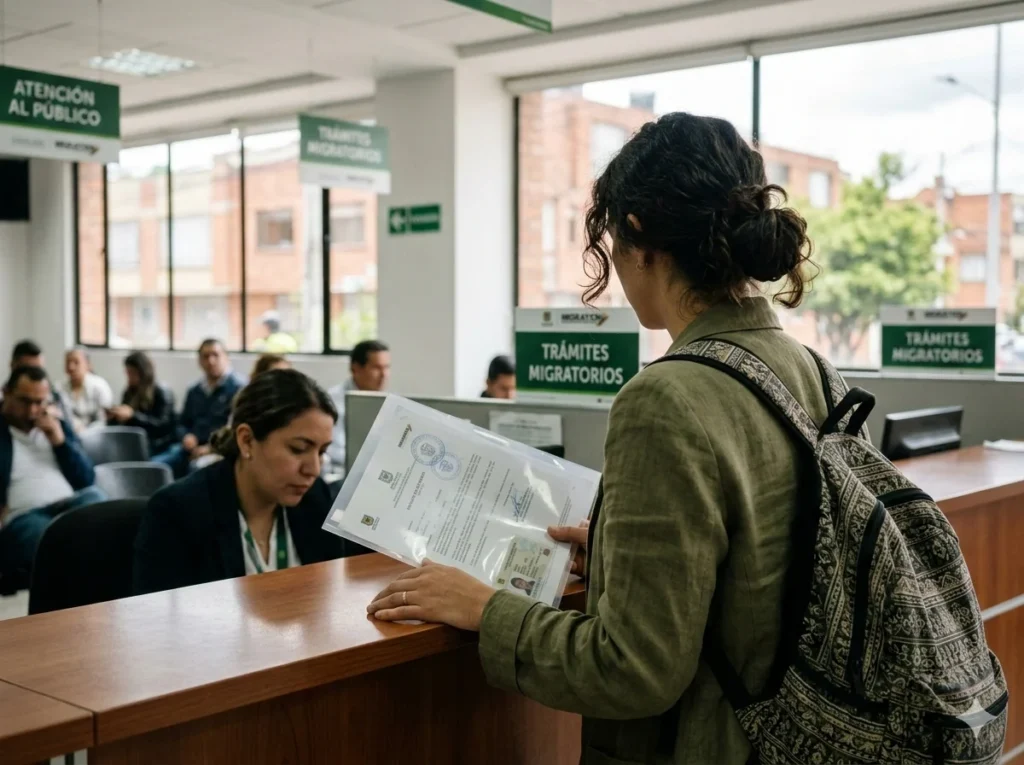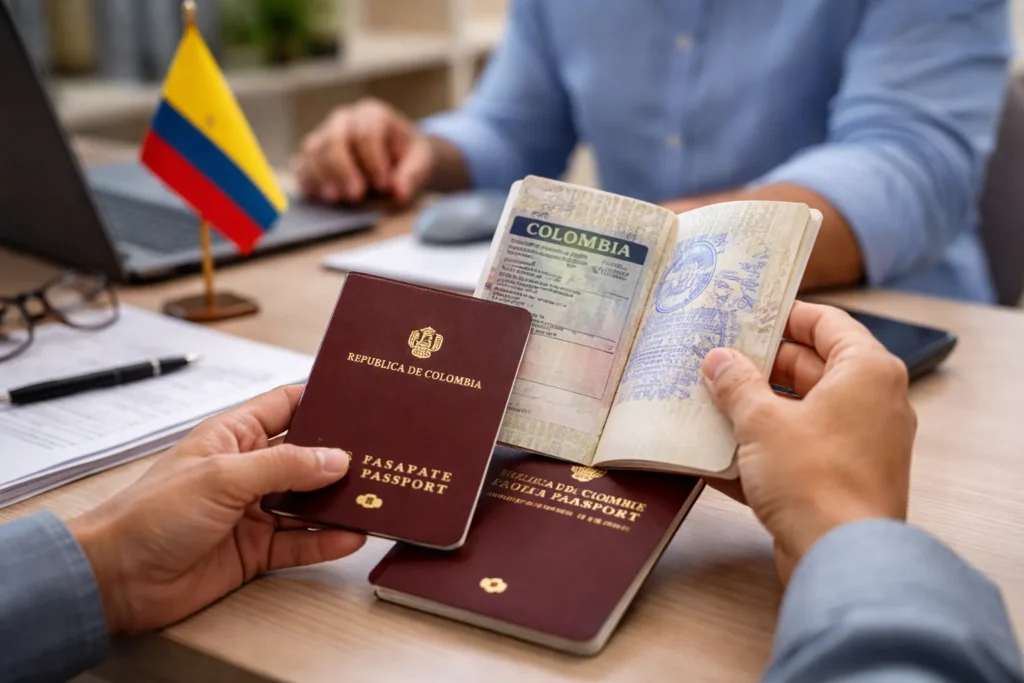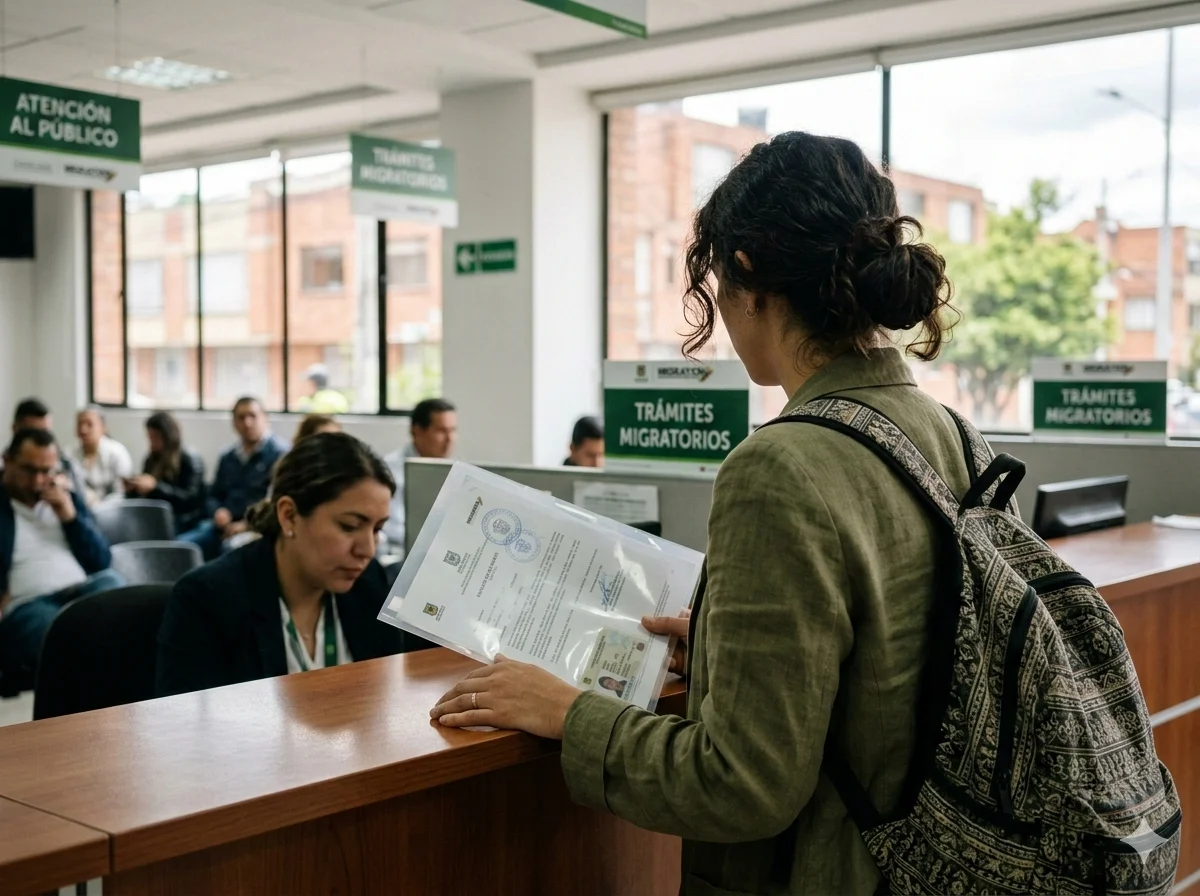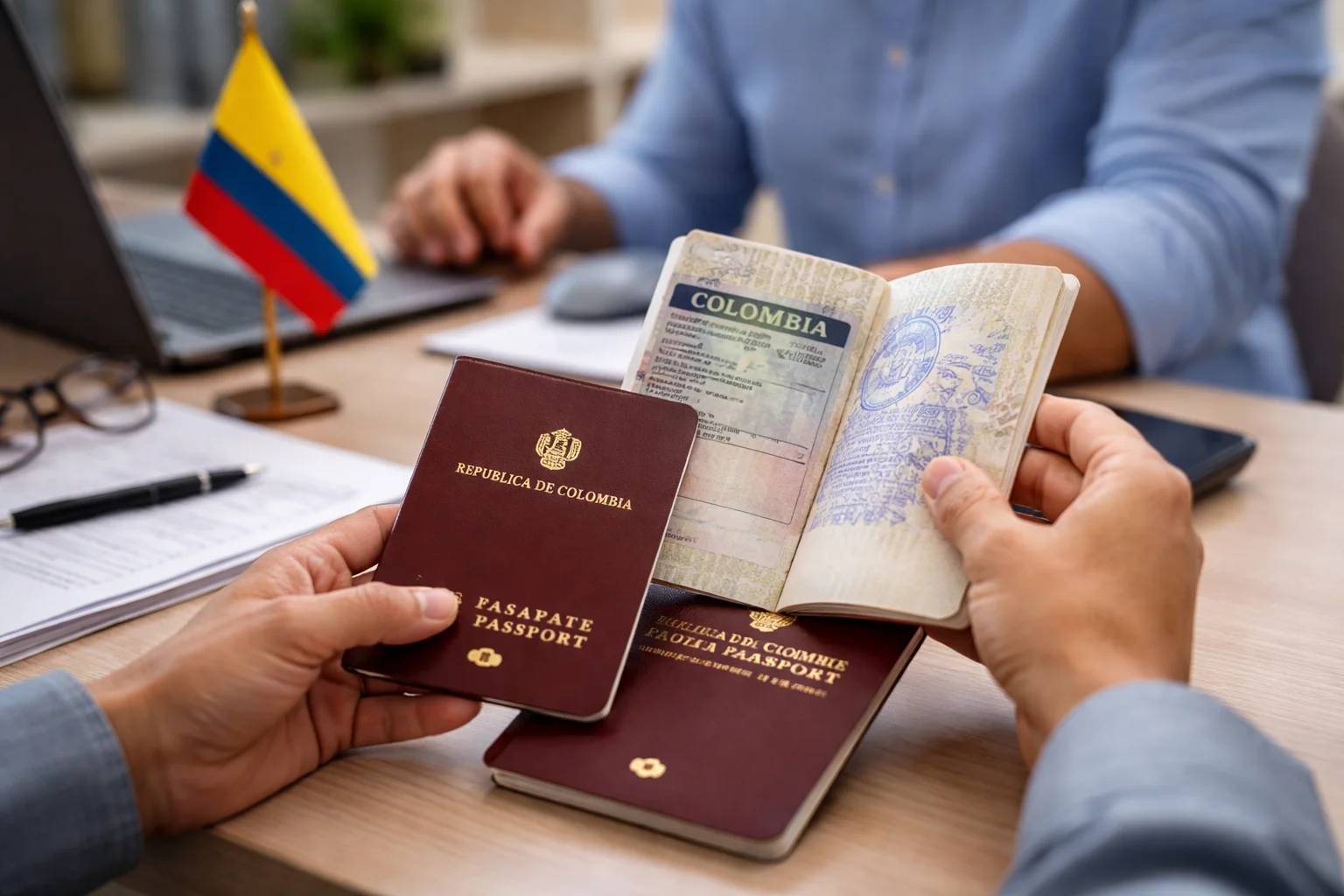
The 15-Day Compliance Sprint is the critical window following your visa approval where you must register with Migración, apply for your Cédula, and set up banking and health insurance. Missing these deadlines can stall your relocation and lead to administrative fines. In this guide, you will find a day-by-day roadmap to synchronize your legal ID with your tax (RUT) and health (EPS) records, ensuring a seamless transition to your new life in Colombia.
The 15-Day Compliance Sprint: quick roadmap
The first 15 days after visa approval create legal and administrative deadlines that cascade into daily life: Migración entries and visa validation, cédula application windows, and the ID-dependent tasks such as opening bank accounts and registering for the RUT tax profile. The main principle of The 15-Day Compliance Sprint is to treat these tasks as linked: missing one appointment delays the next, so plan for redundancy and document readiness from day one.
Sequence you should expect
Typical sequence in the sprint is:
(1) confirm visa activation and any registration required with Migración.
(2) start the cédula (citizenship card/resident ID) process within its mandated timelines.
(3) begin banking onboarding and EPS health registration which commonly require the national ID.
(4) register for RUT (tax ID) if you intend to work or set up a company.
Each of these steps has logistical nuances—appointments, municipal notaries, digital forms—that flow into one another during the first two weeks.
Day 0–3: immediate visa registration and validation steps
On day zero, confirm the exact legal condition granted by your visa notice: is it already stamped in your passport, or is it an online approval that requires a Migración visit? Errors at this stage—misread visa dates, confusion over entry windows, or failed online validations—are among the most expensive mistakes in sprint. If your visa requires an in-person validation, prioritize booking that Migración appointment and collect confirmed entry documentation before you proceed with any ID-centric tasks.
Expect to provide proof of entry stamp or electronic validation when you later apply for the cédula; missing or mismatched arrival records can force a repeat of steps. A practical rule: capture screenshots and print confirmations the moment you receive them, and keep the originals in a single folder for easy retrieval.
Day 2–8: initiating the cédula / citizenship card process
Starting the cédula process early is central to the 15-Day compliance sprint because the national ID unlocks most life-admin tasks. You will need identity documents, copies of your visa and entry stamp, and verified civil records depending on your visa category. In many cities the appointment calendar for cédula issuance fills quickly; treat this as a priority scheduling problem rather than optional paperwork.
Common procedural steps include paying the municipal fee, booking a biometric session (photo and fingerprints), and confirming your registered address. For a detailed breakdown of forms and supporting evidence, consult our complete guide to the citizenship card in Colombia, which clarifies physical ID delivery timelines and specific notarization requirements. Scheduling this registration within the first week prevents cascading delays for banking and health insurance (EPS) onboarding.
Practical timing for cédula appointments
Municipal and departmental offices vary. In Bogotá and major cities you may find same-week slots if you book early, while secondary municipalities often have a two-week lead time. If your visa requires a resident cédula and you delay, you risk a penalty or a procedural queue that pushes other life-admin chores outside the 15-Day compliance sprint window.
What to do about Migración and visa validation when timelines are unclear
Visa activation is not universal: while some categories are activated upon entry, others require formal administrative registration. If your approval notice is unclear, treat this as a high-priority task. Assumptions about your legal status are a common cause of failure.
To avoid administrative gaps, contact Migración Colombia directly or secure legal assistance to verify your specific registration window. Remember: an incorrectly registered visa can block your cédula application and your ability to open a bank account.
Day 5–12: banking onboarding, EPS and RUT—ID-dependent tasks
Once the cédula process is underway or complete, prioritize the tasks that require the national ID. Banks, EPS (health system), and the DIAN RUT tax registry commonly require the cédula number or physical card for identity verification. A recommended operational sequence during the 15-Day compliance sprint is: open a bank pre-account or submit onboarding forms, register for EPS affiliation, and then file for RUT registration if you will become an employee, contractor, or company owner.
Banking in Colombia requires careful documentation: banks review foreign IDs, visa stamps, proof of address, and source-of-funds explanations. When you prepare documents in advance you reduce time at physical branches and the risk of application rejections. For detailed banking requirements and options, consult materials that outline processes and documentation for opening accounts and expected timelines for non-residents. banking in Colombia
EPS enrollment timelines can be automatic if you are on a payroll or require explicit registration if you are self-paying. The RUT process is less time-sensitive in many cases, but it is critical if you plan to invoice, hire staff, or set up a negocio. Each institution has discrete identity and address verification steps—prepare notarized translations if your documents are not in Spanish.
| Task | Typical timeline | Why it matters |
|---|---|---|
| Migración visa validation | 0–3 days | Legal status confirmation; prerequisite for cédula |
| Cédula application | 3–10 days | Unlocks banking, EPS, municipal services |
| Bank account, EPS, RUT | 5–15 days | Enables salary, payments, tax compliance |
Plan the order of appointments so that ID-dependent services are booked only after you have confirmed the cédula number or the expected delivery date. If you must start a bank relationship within the first two weeks, ask about pre-onboarding measures and whether an appointment may be conditional on a cédula request number.

Talk to an English-speaking Colombia lawyer
Get clear, step-by-step legal guidance for visas, property, family and business matters in Colombia. We review documents, reduce risk, and represent you when needed. Send your details and we’ll respond with next steps.
Common blockers during The 15-Day Compliance Sprint
Recognizing frequent blockers allows you to design contingencies. The standard culprits include fully booked appointment calendars, mismatched personal data between passport and civil records, missing printed documents, unclear proof of local address, and civil documents that are stale or require apostille/translation. These obstacles often require additional notarizations, municipal visits, or third-party verifications that push tasks beyond the 15-day window.
The visa processing timeline itself can influence how quickly Migración and cédula steps must be completed; if your visa required complex consular validation the timing can vary dramatically by case. For detailed expectations on administrative processing times and how they interact with your local registration schedule, see long-form guidance about Colombia visa processing time and how that affects the downstream calendar. Colombia visa processing time
Operational recommendation: prepare duplicate folders (digital and paper). In the digital folder include scanned passport pages, electronic visa approvals, proof of payment receipts for municipal fees, and an indexed checklist; in the physical folder keep printed originals and notarized copies organized by task. This redundancy reduces the chance of repeated trips and missed windows during The 15-Day Compliance Sprint.
Examples of role-specific blockers
For employees: payroll enrollment may be blocked when the employer’s HR team cannot verify the cédula number. For property renters: a landlord may request a local guarantee or additional residency proof. For entrepreneurs: RUT registration may require municipal identification of economic activity that differs by city. Anticipate these variations when you plan time and documents in the sprint.
Remote vs in-person reality check for each task
While not every task requires an in-person visit, almost all benefit from local representation. To succeed in the 15-day compliance sprint, you should categorize your obligations into fully remote, hybrid, and fully in-person tasks. Fully remote tasks include initial legal consultations, document reviews, and online fee payments where permitted. Hybrid tasks involve remote submissions followed by branch verification, such as bank account pre-onboarding or EPS registration initiated by an employer that later requires an in-person ID scan. Finally, fully in-person tasks typically include Migración validations, cédula biometric capture, and specific notary acts.
- Migración validation: usually in-person or through a formal online portal with strict identity checks; schedule in-person if required.
- Cédula biometric capture: almost always in-person; necessary early in the sprint.
- Banking onboarding: hybrid—start remotely, finalize in branch with ID.
- EPS and RUT: typically hybrid, some municipal RUT processes require in-person verification depending on your declared economic activity.
Plan the sprint with travel time between appointments, time for notarizations or apostilles, and contingency days for rescheduling. In practice, an English-speaking local practitioner or representative can complete many hybrid steps on your behalf if you sign a power of attorney or a letter of representation in advance.
What can wait and what can’t during the first 15 days
Must-do within the initial window: Migración visa validation (if required), cédula application and biometrics, bank account initiation if you need to receive a salary or transfer funds, and basic EPS affiliation to ensure health coverage starts. Can-wait beyond the 15-day period: municipal utilities registration not tied to legal residence, formal company registration expansions, and non-urgent land registry tasks.
Example prioritization: if you must choose between immediate RUT registration and cédula capture, prioritize the latter because the RUT often cannot be completed without the national ID number. Actionable recommendation: establish two parallel tracks—one for legal identity tasks (Migración, cédula) and one for preparatory tasks (bank forms, EPS paperwork) so that once the ID is issued, you can complete all dependent items in a single day.
Final checklist: day-by-day actions in The 15-Day Compliance Sprint
Use this condensed daily checklist as a practical tool. Day 0–1: confirm visa activation and print all documents. Day 1–3: book Migración appointment if required and reserve the earliest cédula slot. Day 3–6: attend cédula capture, obtain registration number or receipt. Day 4–10: submit bank onboarding documents and EPS registration, keeping proof of submissions. Day 7–15: finalize RUT registration if applicable and collect issued cards/documents. Reserve days for rescheduling and notarizations.
Practical tip: assign ownership for each task—who in your household or which representative will own Migración, which bank contact is assigned, and who will be the liaison for EPS/RUT follow-ups. That accountability reduces friction during the sprint and ensures tasks are completed in sequence rather than in parallel chaos.
After the sprint: monitoring and follow-up
Completing The 15-Day Compliance Sprint is not an endpoint; it is the beginning of normal administrative life in Colombia. After the first two weeks, monitor delivery timelines for physical cards, confirm payroll or banking activation, and verify EPS enrollment. If any document is delayed, request and archive official receipts or proof of submission to avoid fines or misunderstandings later.
Keep a two-month check-in schedule for items that often have delayed delivery: cédula physical card, bank debit cards, and official RUT certificates. If you encounter persistent delays, escalate through legal counsel or municipal ombuds offices to avoid prolonged administrative blocks.
Frequently asked questions about post-visa registration
? How do I handle document translations or apostilles fast during the sprint?
? What are realistic costs to expect in the first 15 days?
Actionable recommendation: prepare a modest contingency fund equal to one to two weeks of living expenses plus an extra 200–400 USD to cover unexpected notary or translation fees, and request fee estimates from banks and municipal offices in advance so you can allocate funds and avoid delays caused by payment processing.
? How do appointment backlogs usually impact the sprint and what KPIs should I monitor?
? When should I use a power of attorney and what risks does it mitigate?
? Are there low-cost digital tools that streamline document collection and tracking?
passport_page_1.pdf or visa_approval.pdf—enables parallel processing with your legal advisor without the need for repeated emailing. Using mobile scanning apps to create high-quality PDFs and standardizing filenames ensures your documents are ready for immediate submission. To save time, create this shared folder before arrival and grant editing rights to your advisor; this single habit often cuts several days off the administrative timetable by allowing real-time uploads of confirmations and receipts.